Missing Inverse
The Big in the Small Studio
04.21.23
Per the design brief, six fully public, universal washrooms are to be built in an alley. The alley, located on Granville Street and tucked between Arthur Erickson’s Dance Centre and a typical Vancouver “I” building, is 7.5m wide and 40m long.
The contradiction between the free-flowing nature of dance, the materials associated with it and the standard, strictly formed concrete in the Dance Centre inspired a study into fabric formed concrete. Textiles are the first material an infant comes into contact with as they are wrapped in a blanket, and humans are almost always clothed or touching some form of fabric. This project attempts to translate the great sense of comfort derived from textiles into the program of a public washroom, in order to humanize a vulnerable place where the feeling is often distinctly inhuman due to an over-adherence to code and material choices.
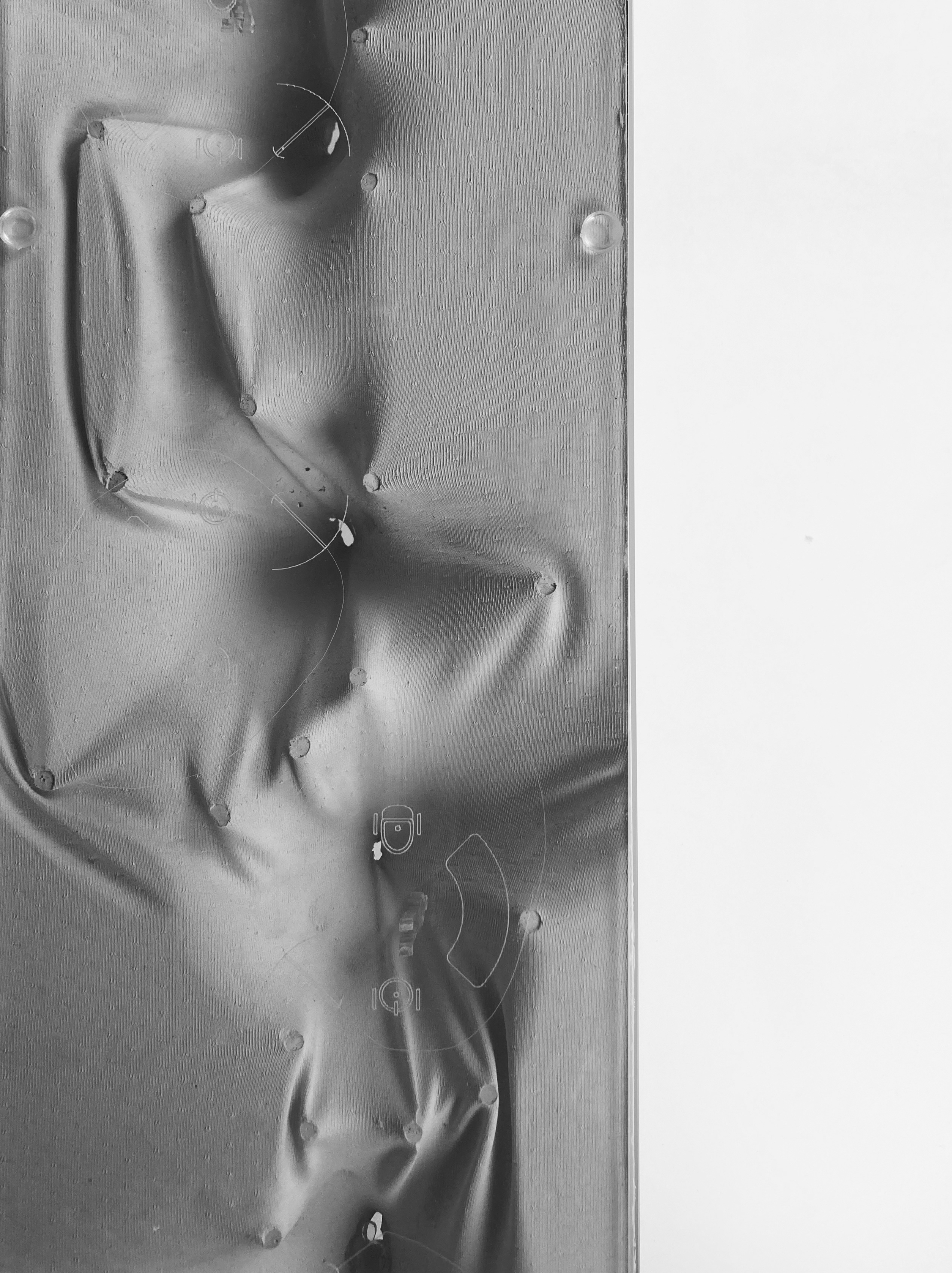
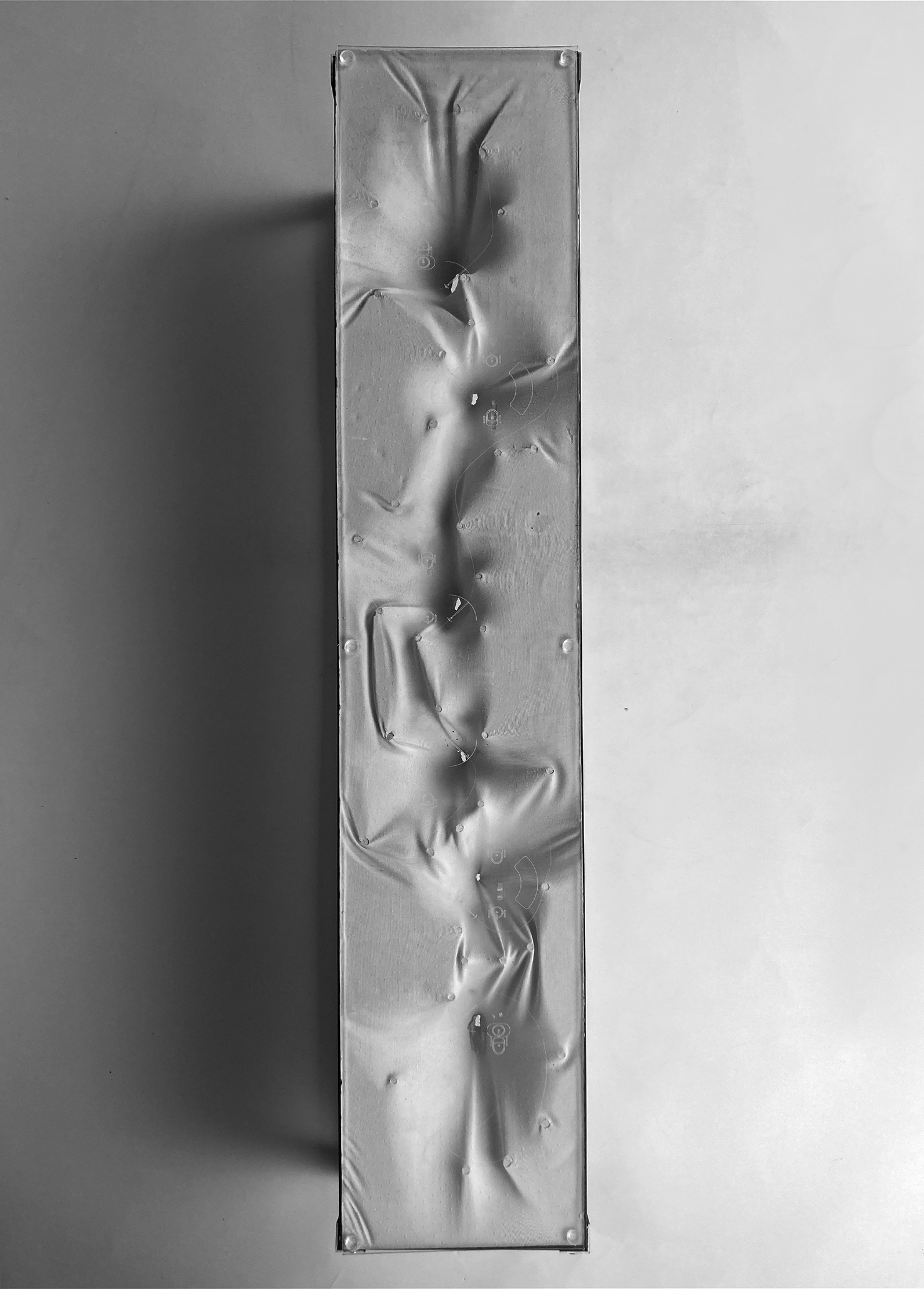
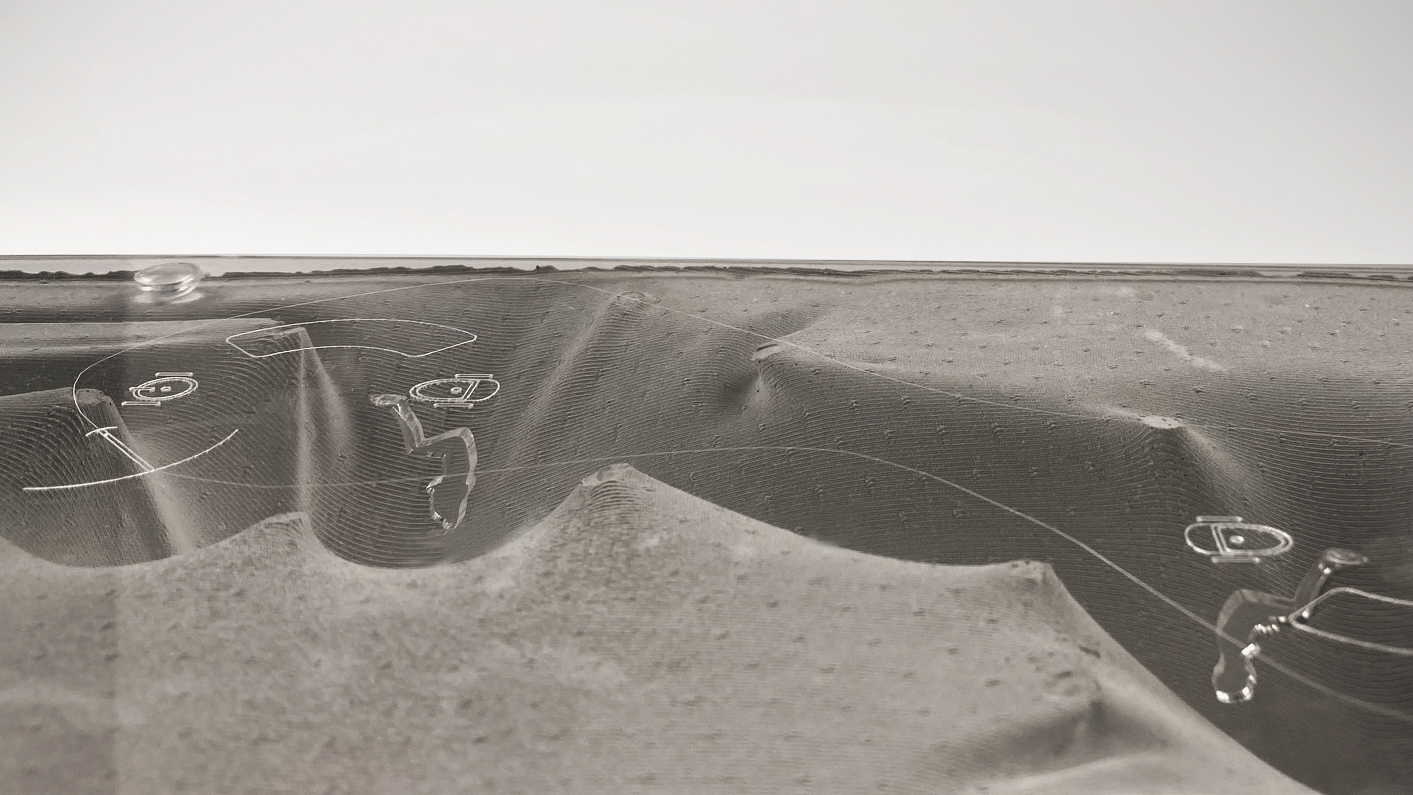
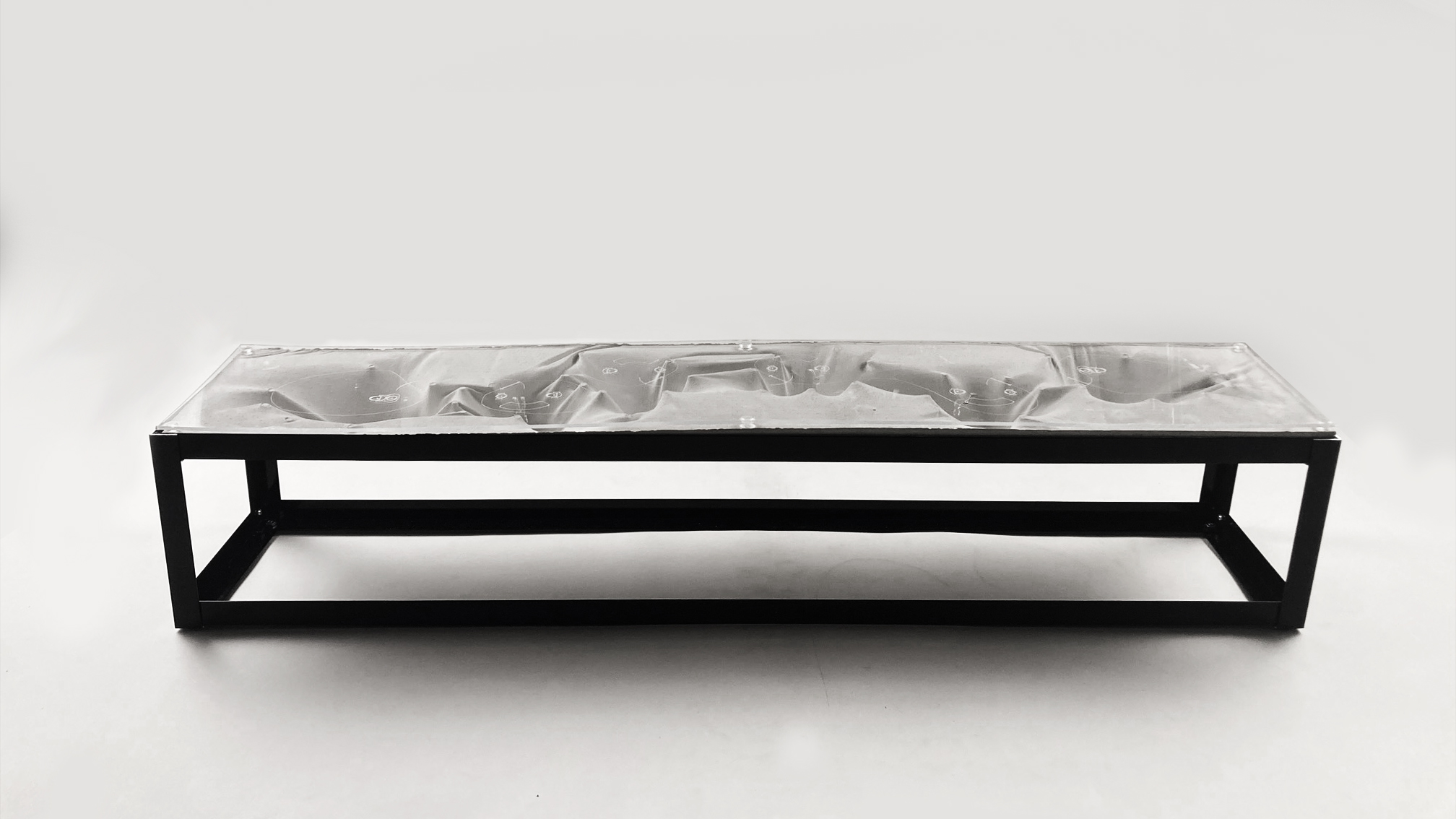
1:50 Worm’s eye view model - A cut along the ground plane shows the inverse of the plan and the interior condition of the fabric formed cones that hold the washrooms. The plan is etched into a layer of clear acrylic.
The approach to site design came from imagining a Christo and Jean-Claude-esque installation that totally wraps the alley in a sheet of fabric. Then, in a dance between cast and resulting form, the parts of the fabric sheet are pulled up to create cavities that hold each washroom. As the casts are removed and the fabric is peeled away, the insides of the washrooms reveal a new condition that echos the presence of fabric but maintains the structural integrity and lighting conditions of concrete.
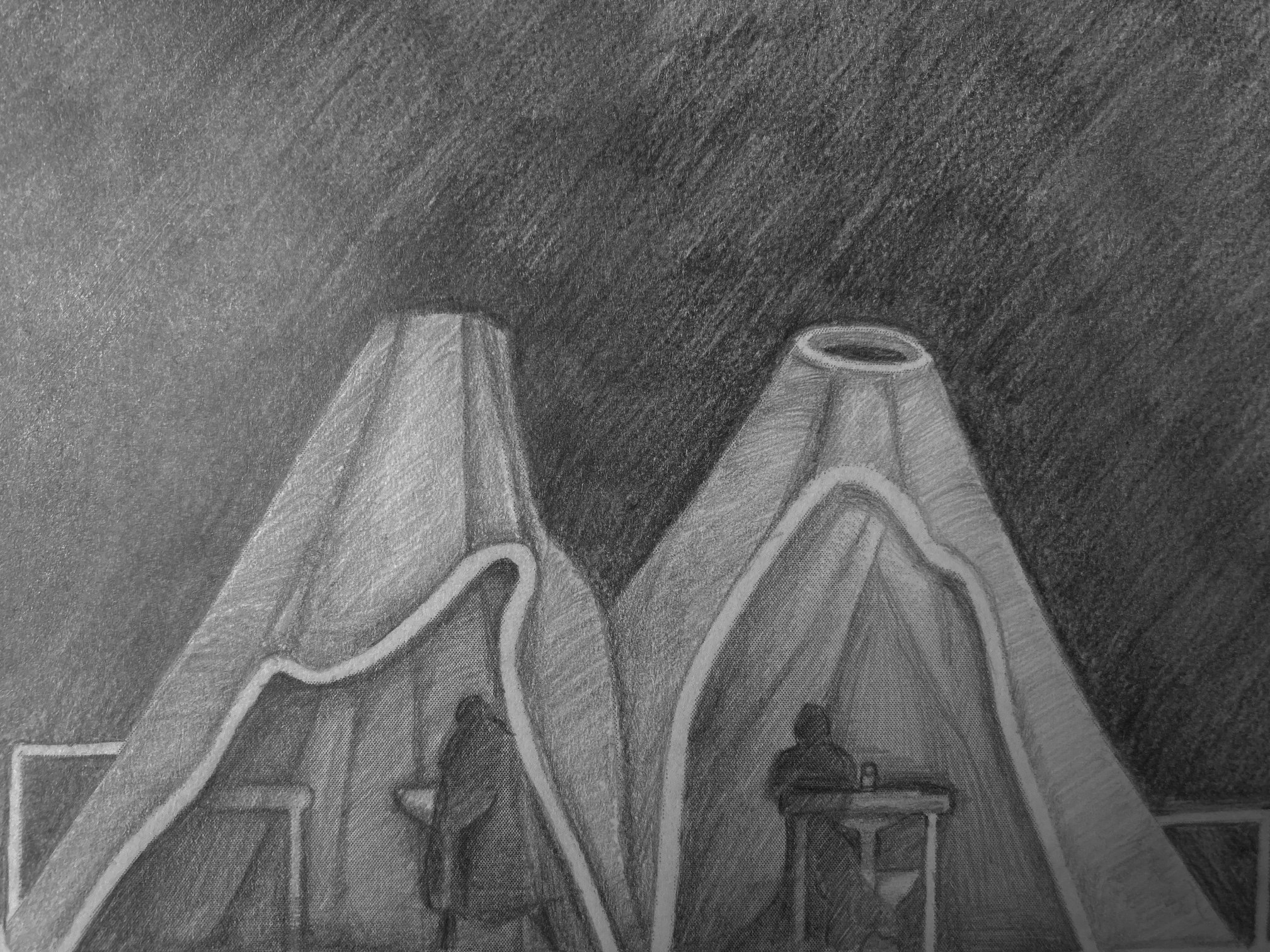
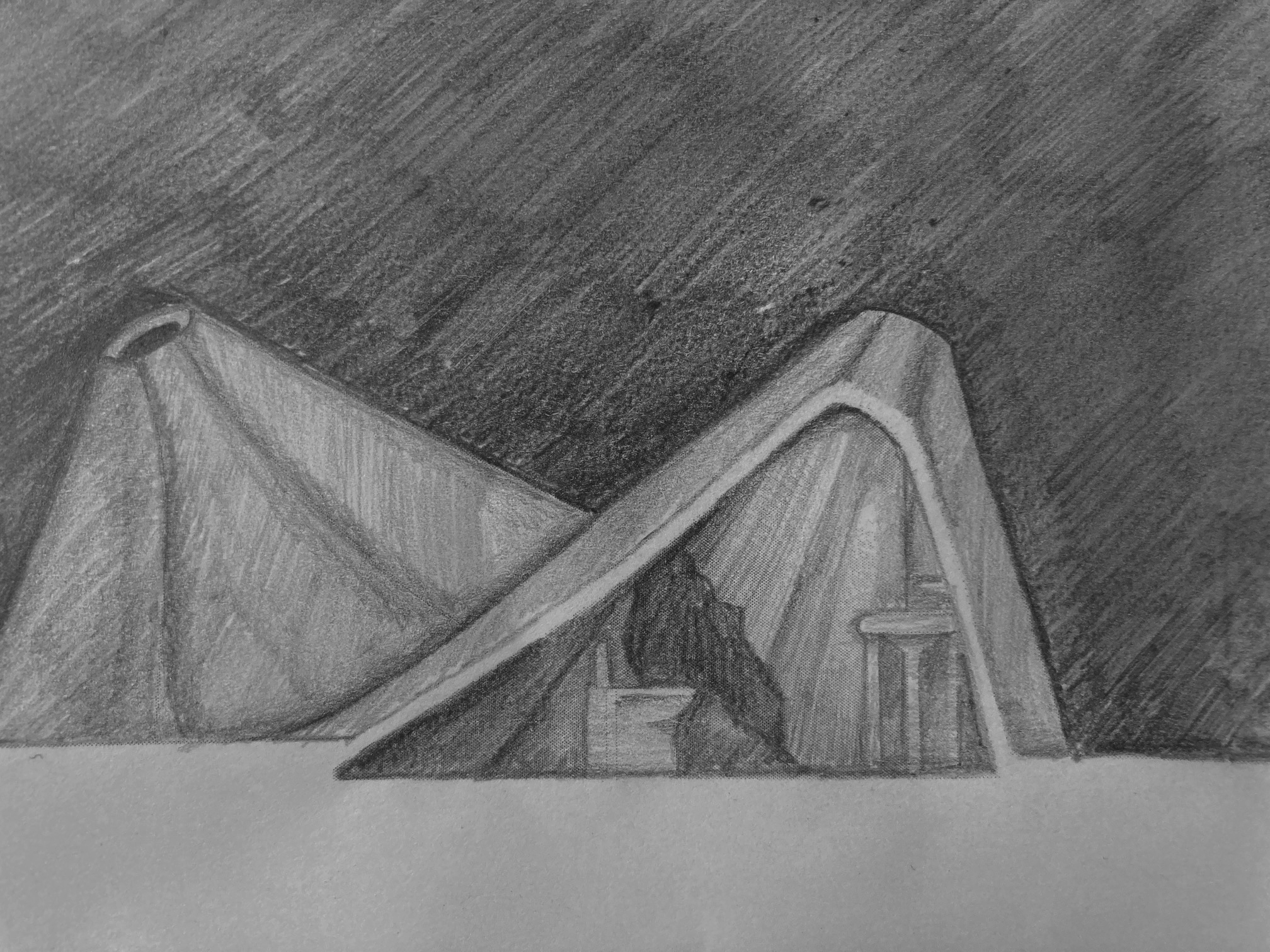
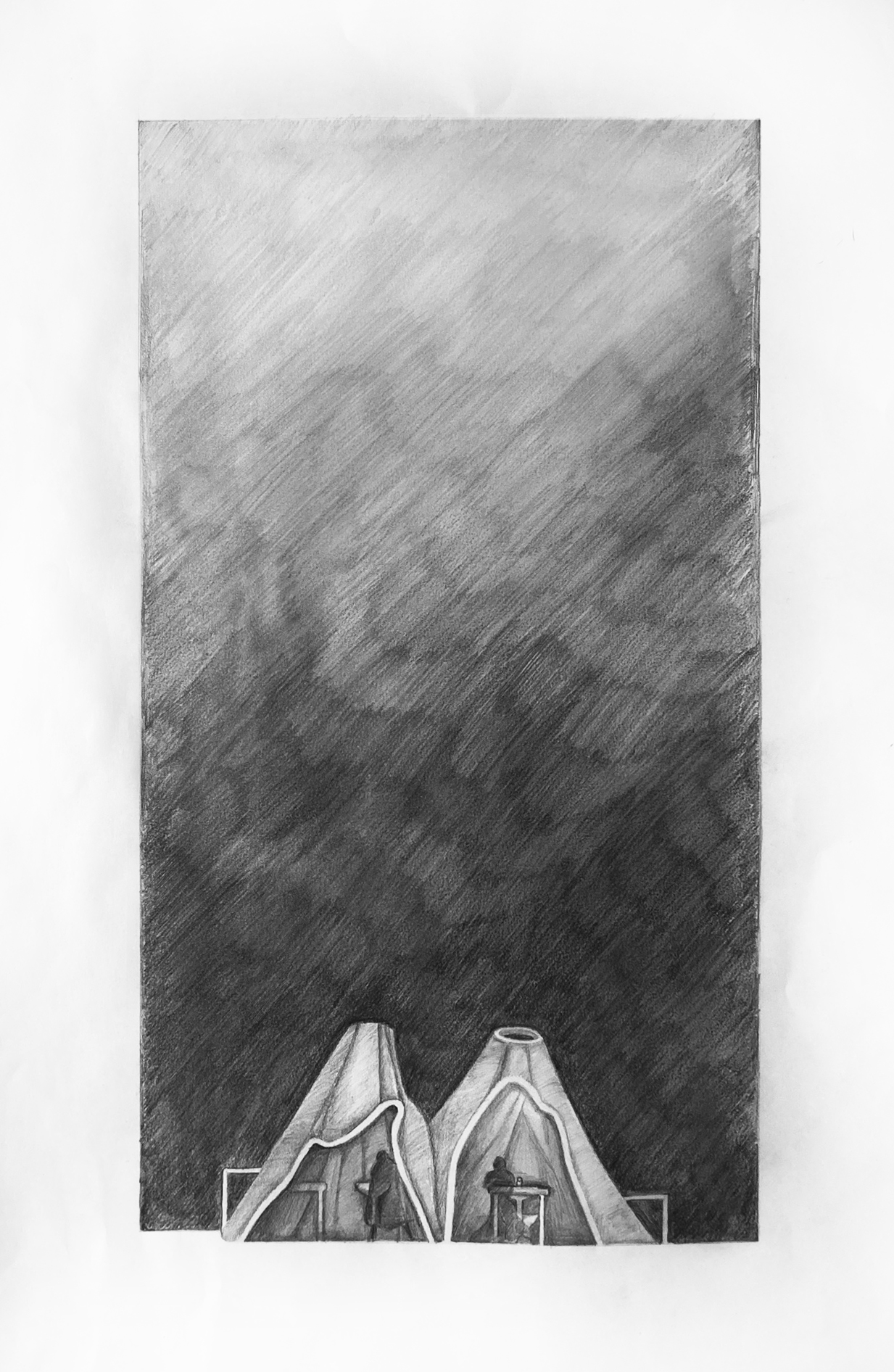
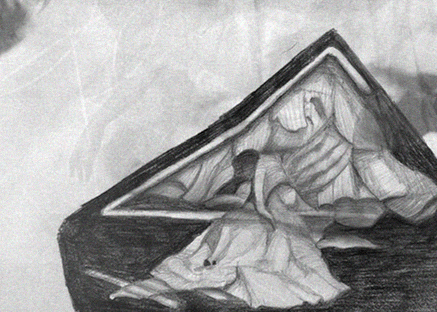
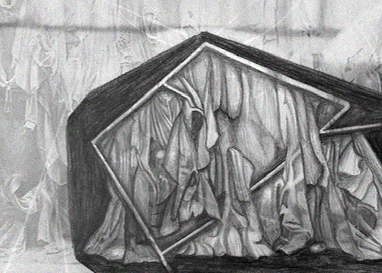
1:75 Graphite hand-drawn sections
The organization of washrooms appear loose and sporadic, though inside, each fixture (toilet, sink, table and door) is aligned with the fixture of another washroom. At any point, a washroom user may (or may not) be in alignment with another, unknown user. This alludes to the presence of a mirrored partner in a dance, though the view is only available to the architect, affording the user privacy but giving clue to an overarching choreography. Just as the casts are missing but the resulting forms remain, mystery shrouds the presence of another character within the site choreography.
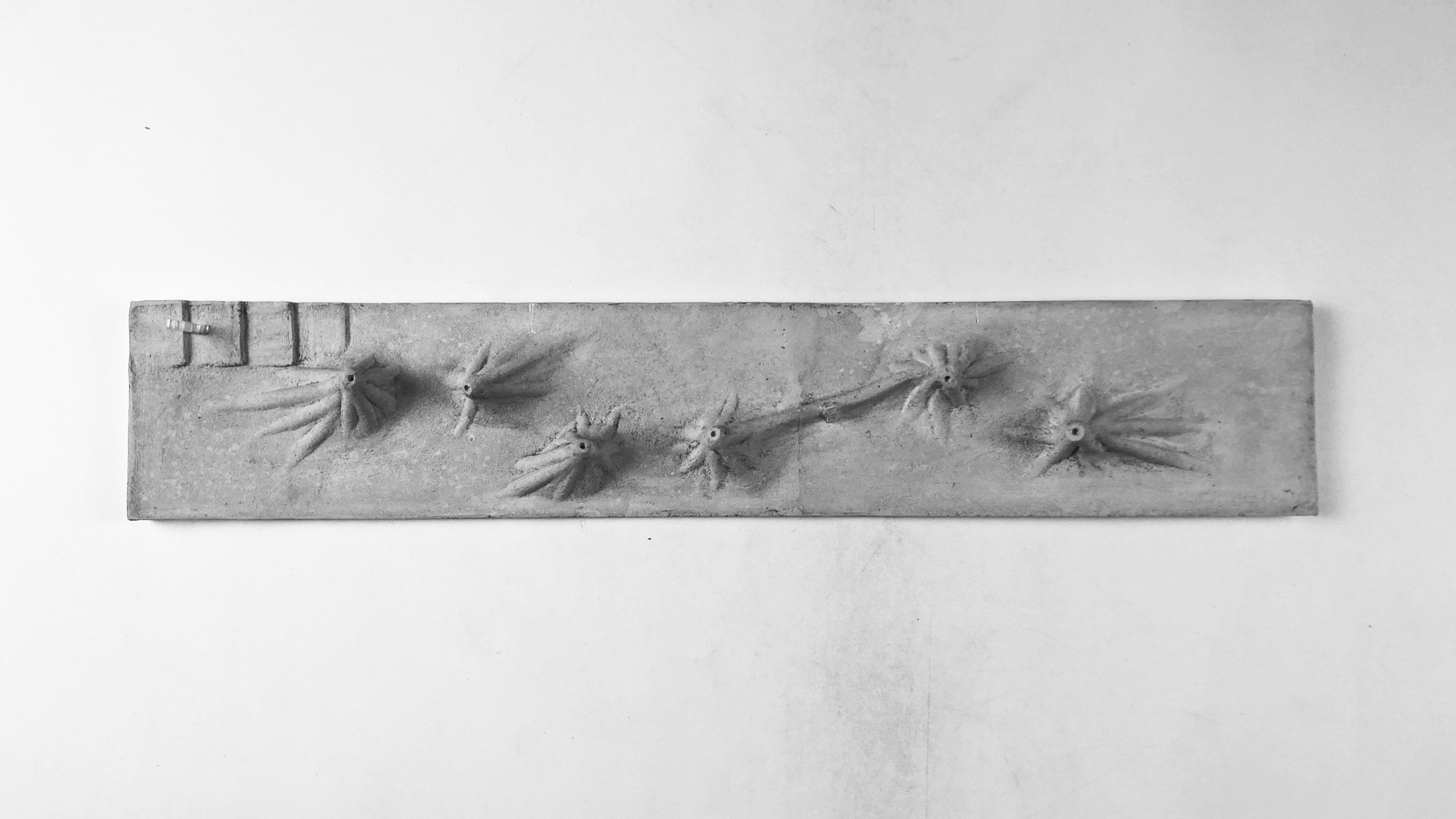
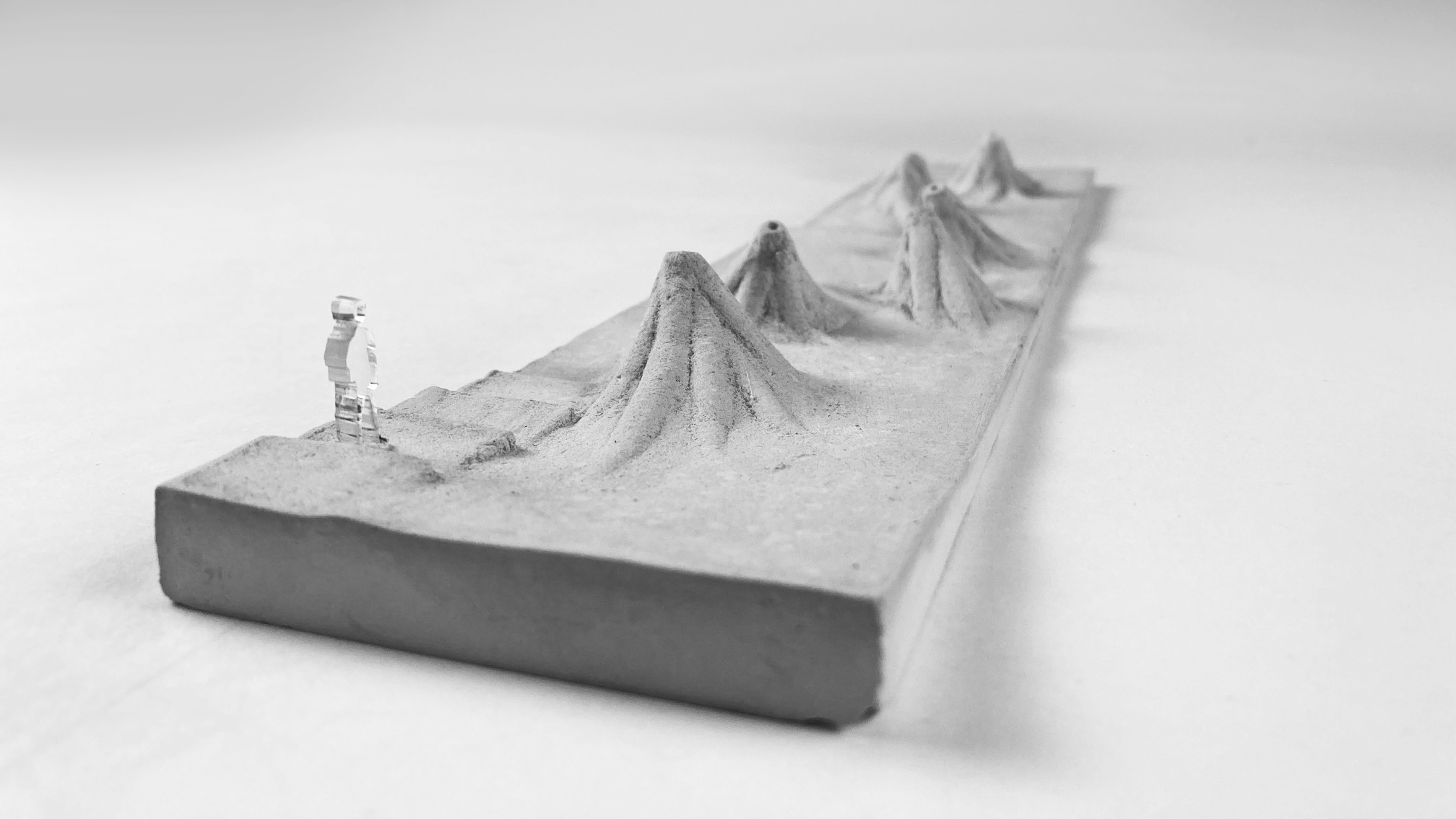
1:100 Site Model
The resulting geometries created by the stretching of fabric create a programless but climable landscape.
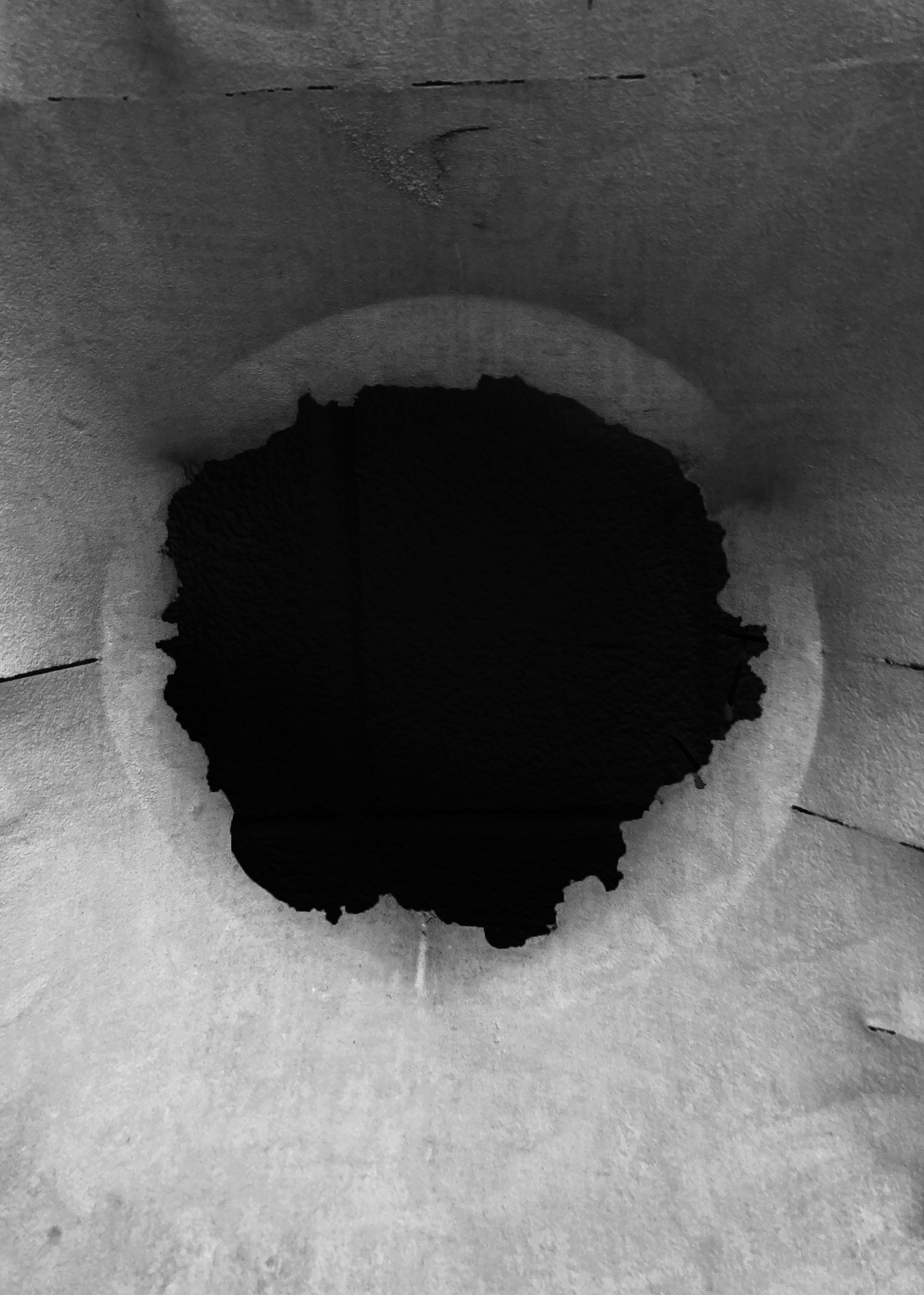
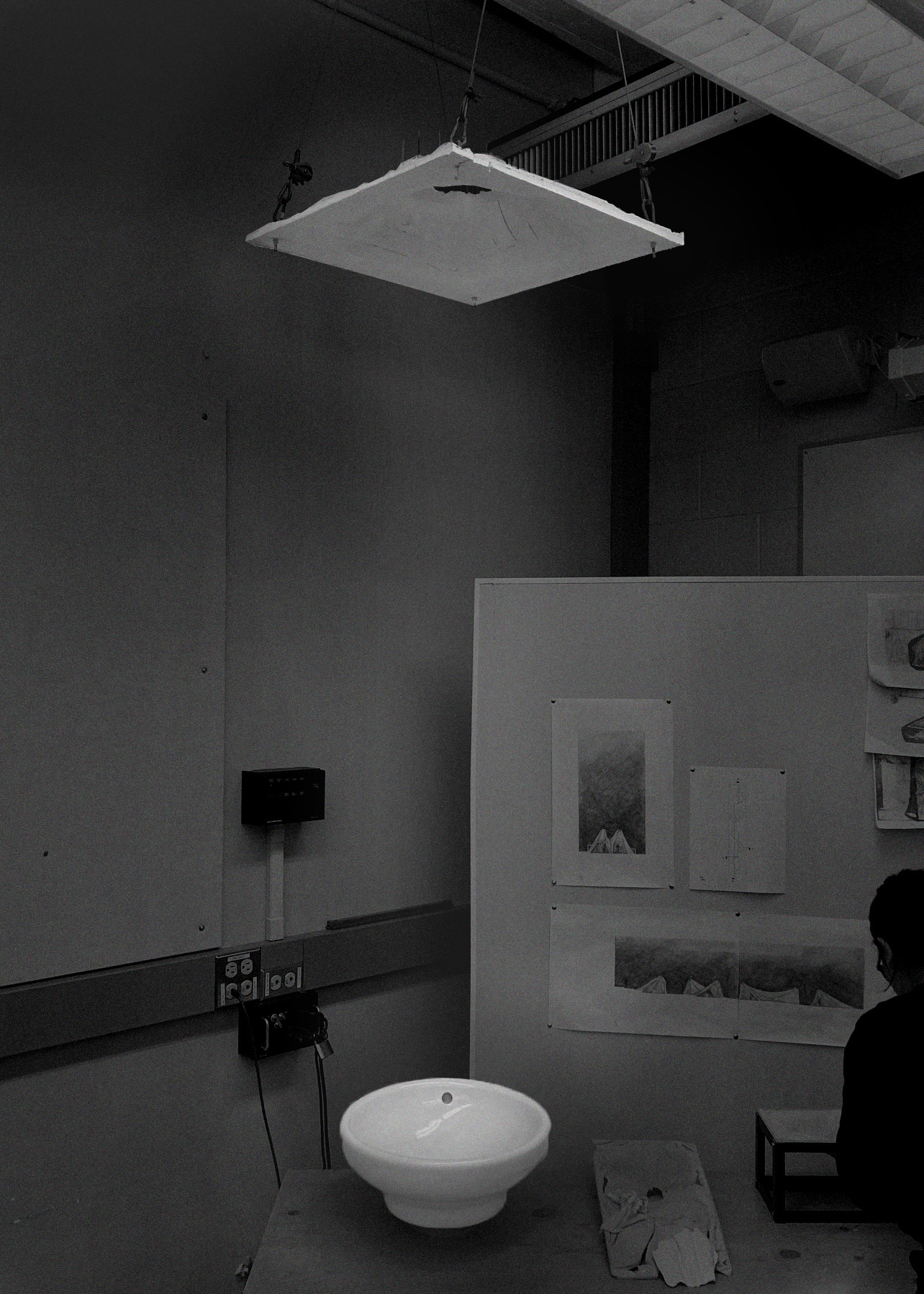
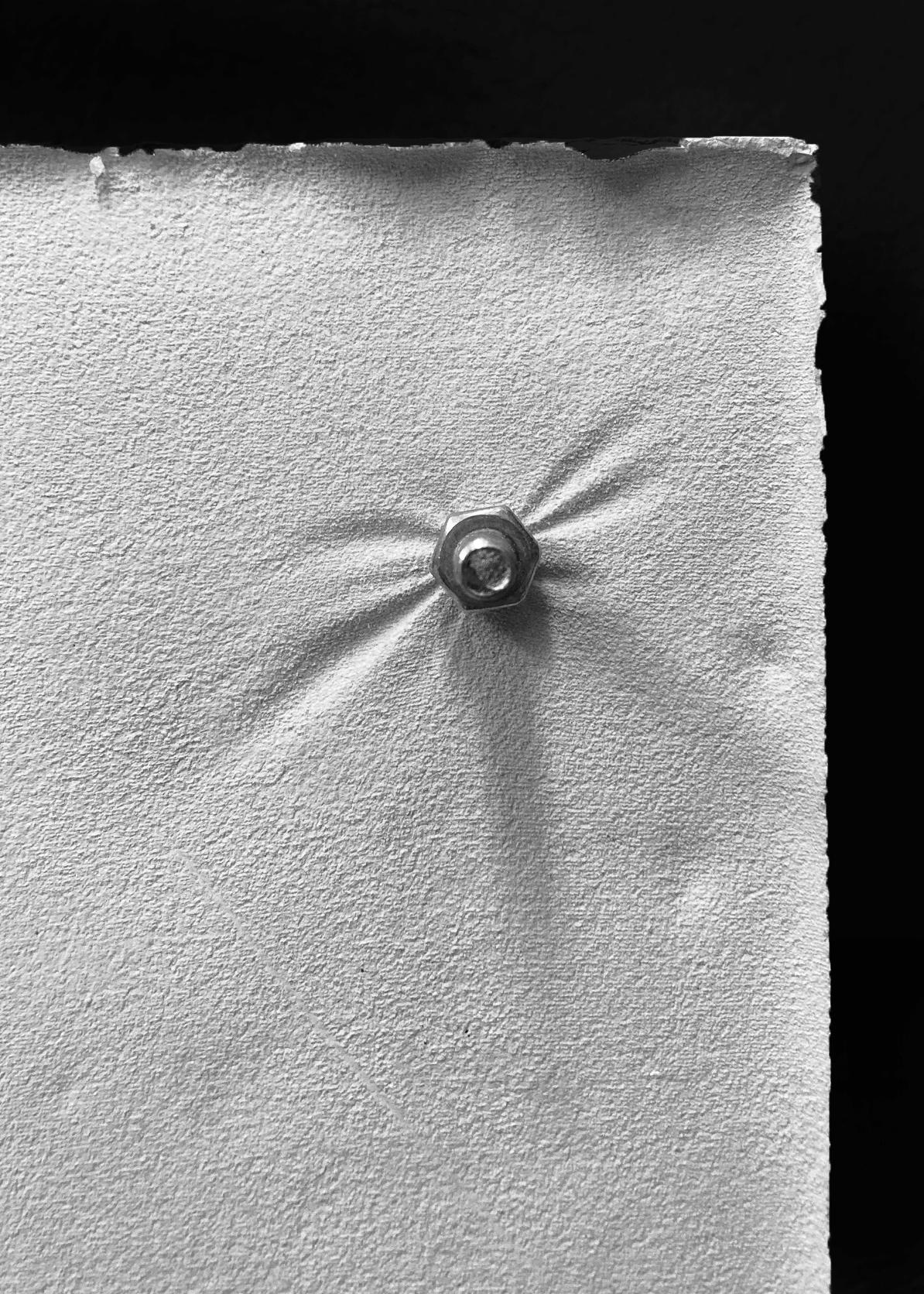
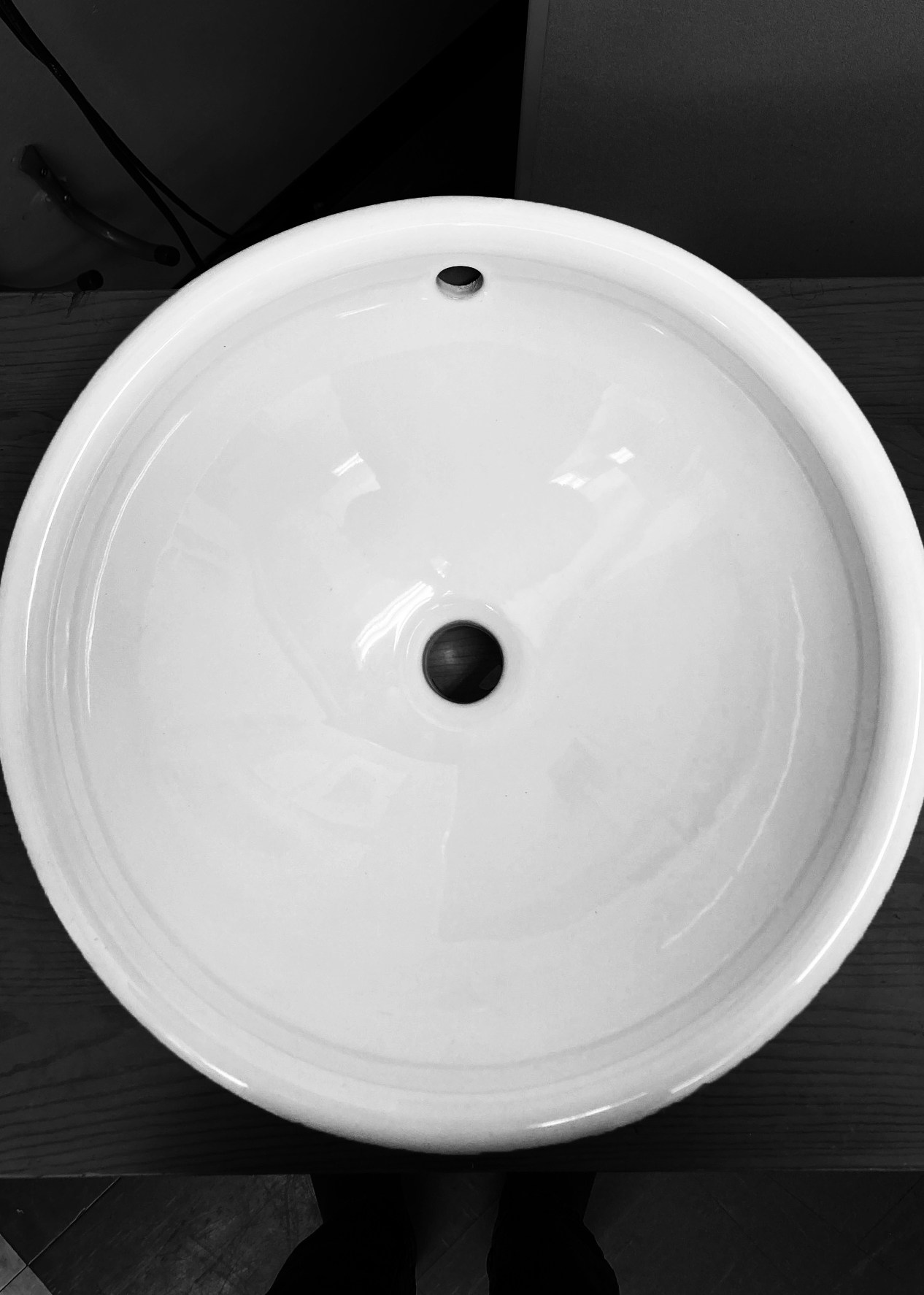
1:1 Detail Model
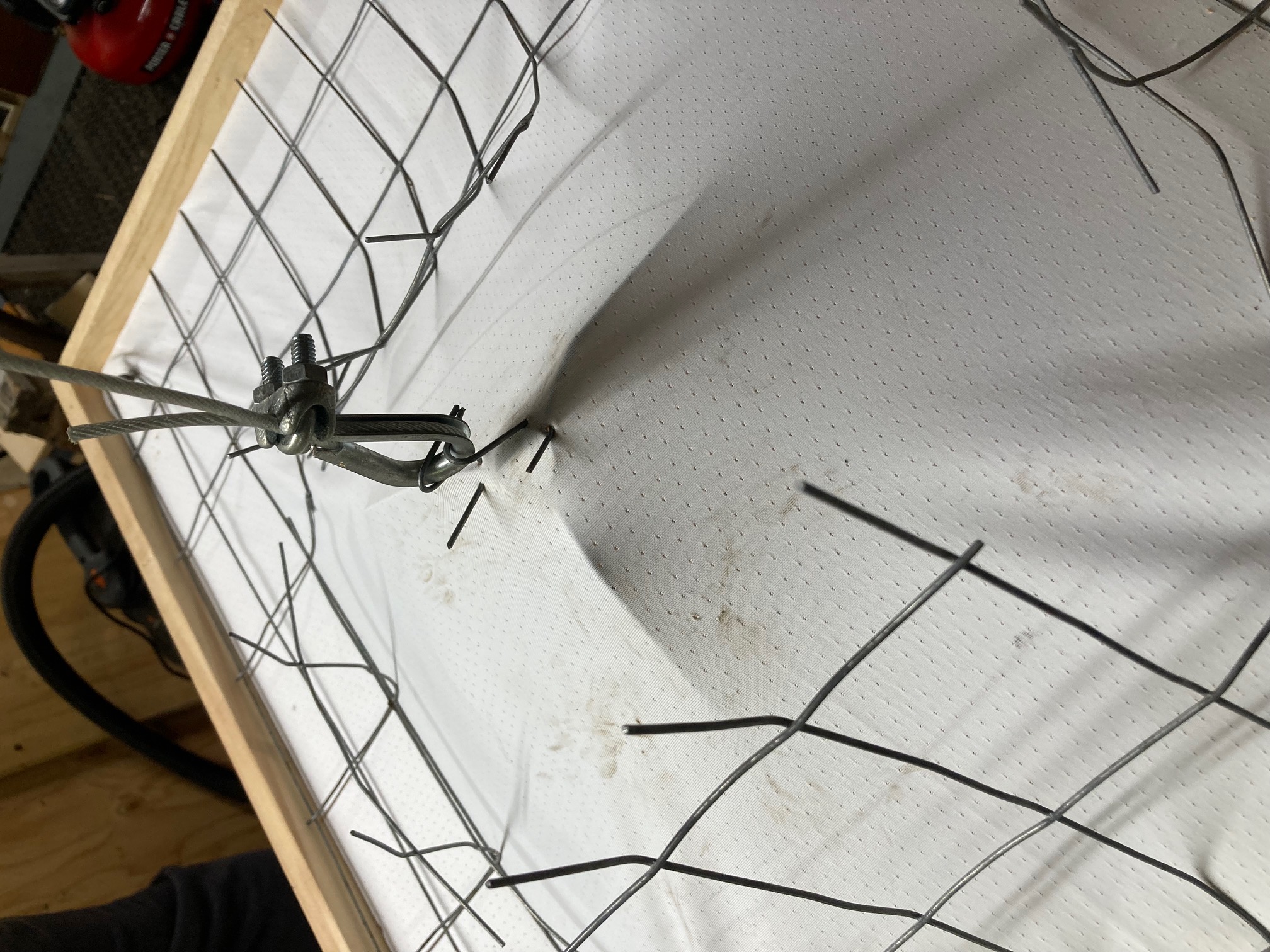
Reviewers were invited to place their hands in the sink and look upward in order to experience the interior of the washroom at a 1:1 scale. The cone-top is strung from the ceiling using the same cables used to pull the fabric during the casting process.
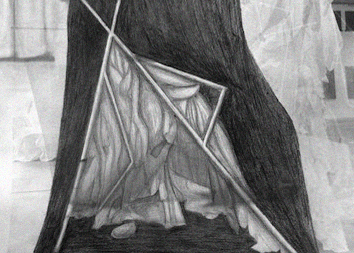
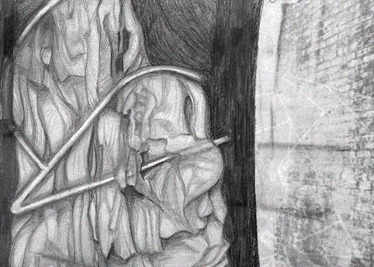
Form-Finding Blackout Drawings
Process - Drawings
As a form-finding study, four drawings inspired by Mark West’s “Blackout drawings” technique were completed early on in the design process. This process involved collaging three images at equally low opacities, then using graphite shading to tease out hidden geometries that result from the overlap. This process takes the pressure of drawing off of the artists shoulders; no actual lines are drawn on the paper. It also allows for a controlled curation of precedents. These drawings are the result of the combination of an Isamu Noguchi sculpture, a pose from Martha Graham’s “Lamentation” dance, and various fabric art installations. This process was then repeated for the architectural hand-drawings, though the sculptural element was replaced with the orthographic sections.
Process - Models
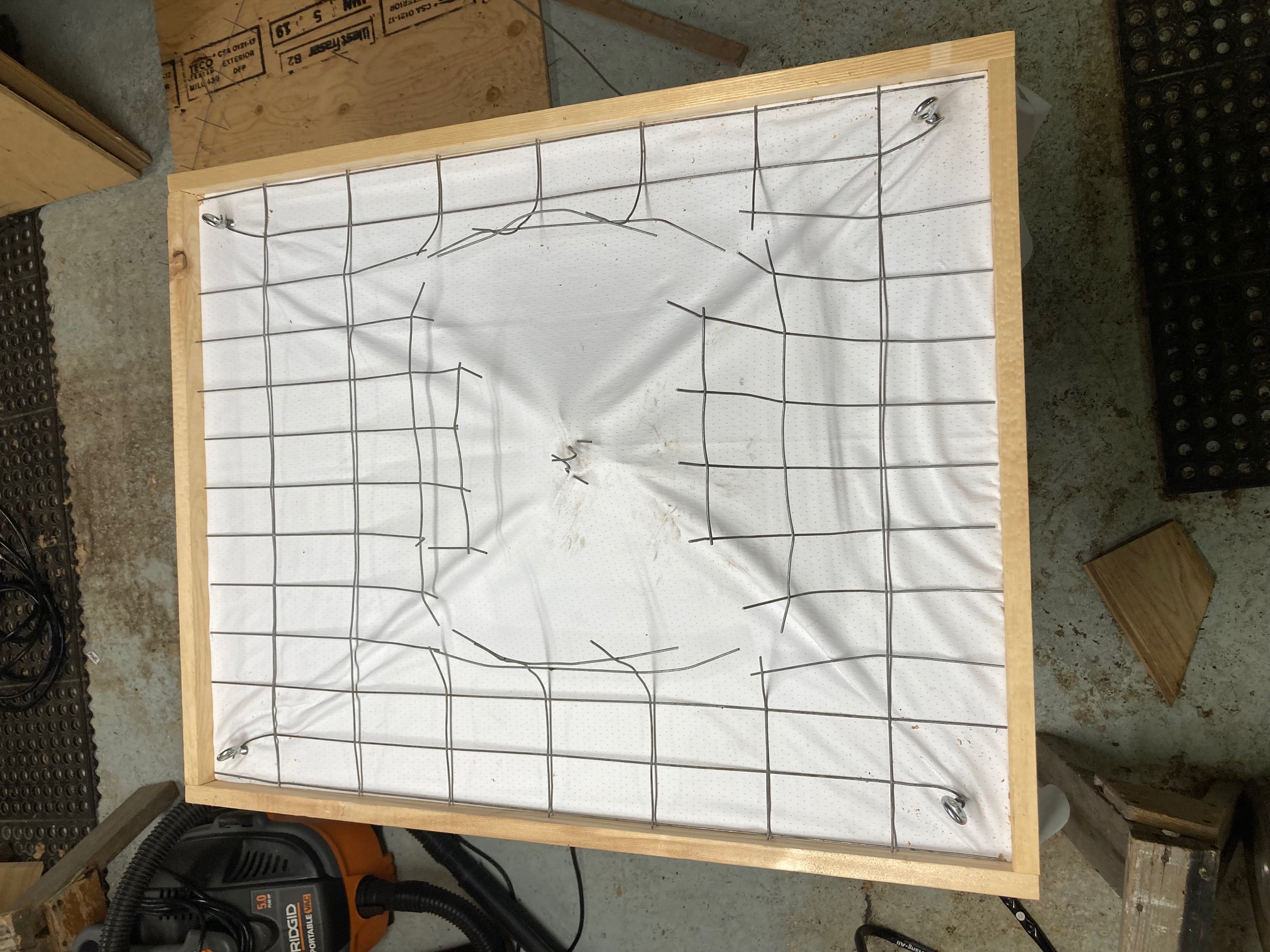
The 1:1 Model of the top of the cone, was the most accurate reprentation of how these structures could be constructed. The process involved pouring a flat sheet of Rockite on fabric, leaving it until it is about 50% hardened, then slowly raising a point of the fabric by a pulley system attached to the ceiling. As the surface area of the fabric increases by stretching upwards, patching is required to fill in little gaps where the surface had stretched. A portion of wire fencing is used as rebar, formed by stretching the fabric before pouring and then mirroring the path it will take by hand-bending the wires.
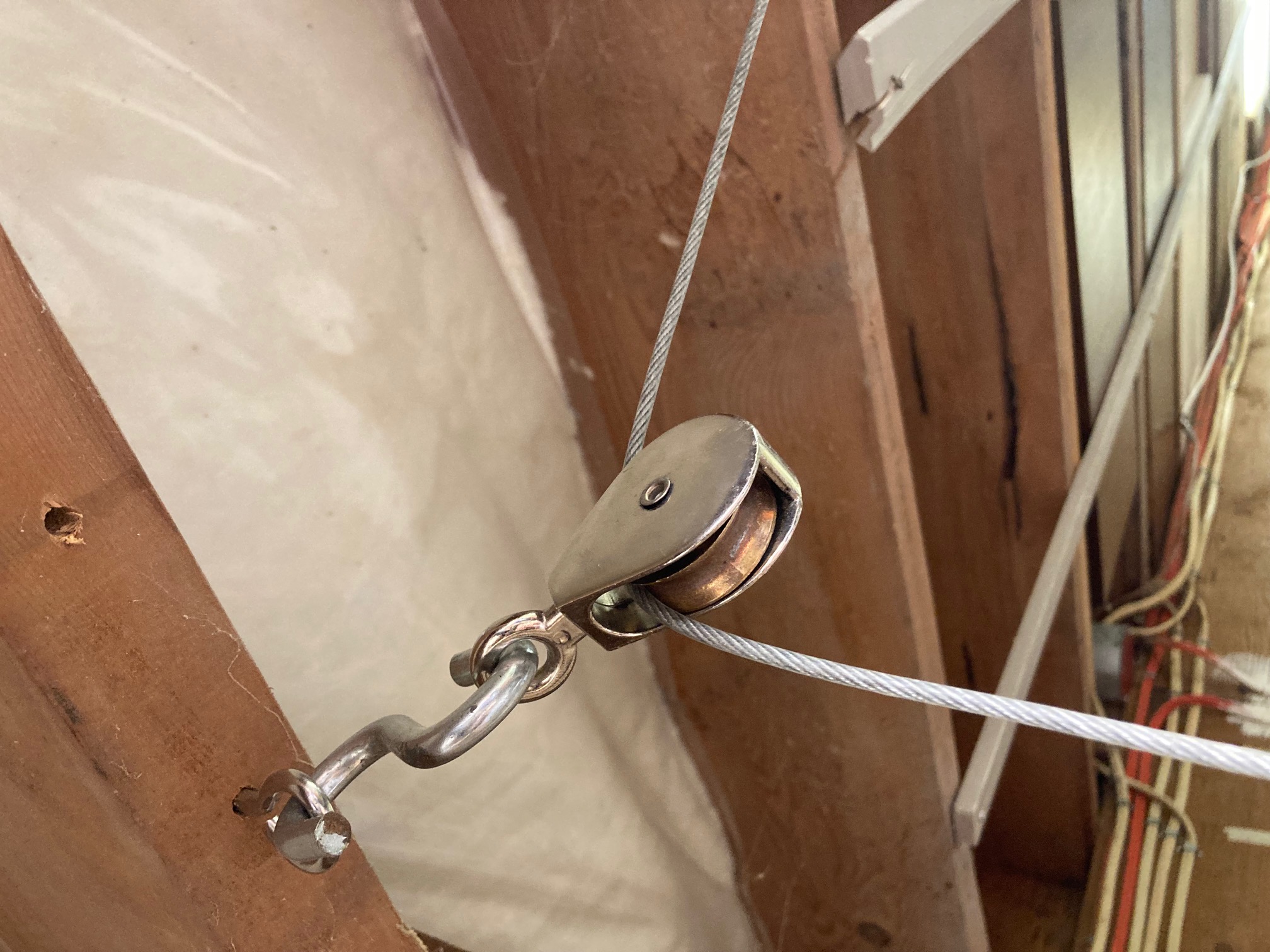
Casting System
Rockite, a fine powder used commonly as a patching cement, was chosen for its’ lack of aggregate, allowing the mix to most accurately capture the patterns and imperfections in the texture of fabric.
The 1:50 Worm’s eye view model is constructed in a similar way, though due to scale and available materials, the pulley system could not be translated. Instead, the points are pre-pulled and poured upon, using a drier mix that could be pasted by hand. While the points of fabric are pulled up, they are also pulled back down to the ground plane by upholstery tacks to create the cavities.
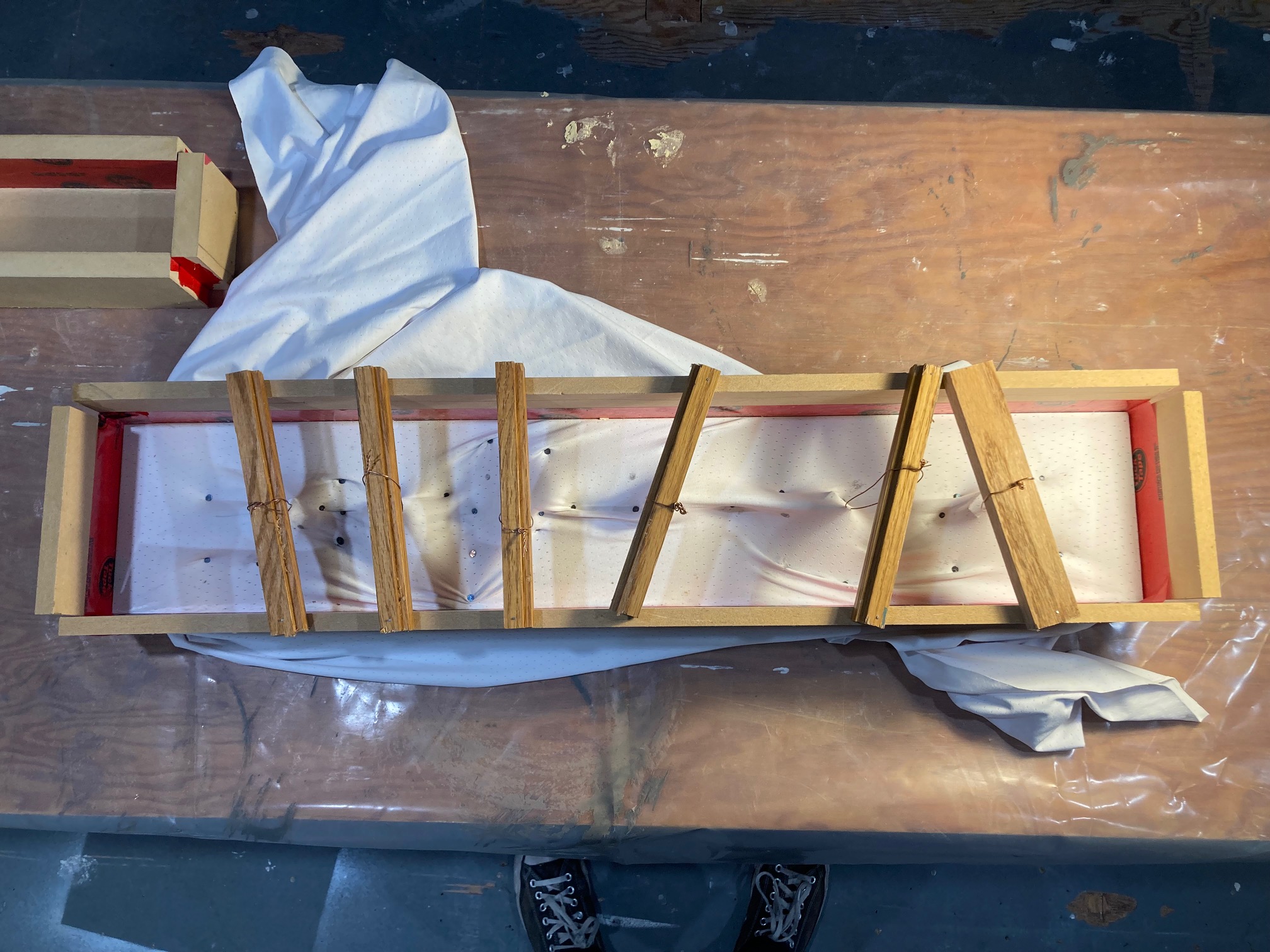
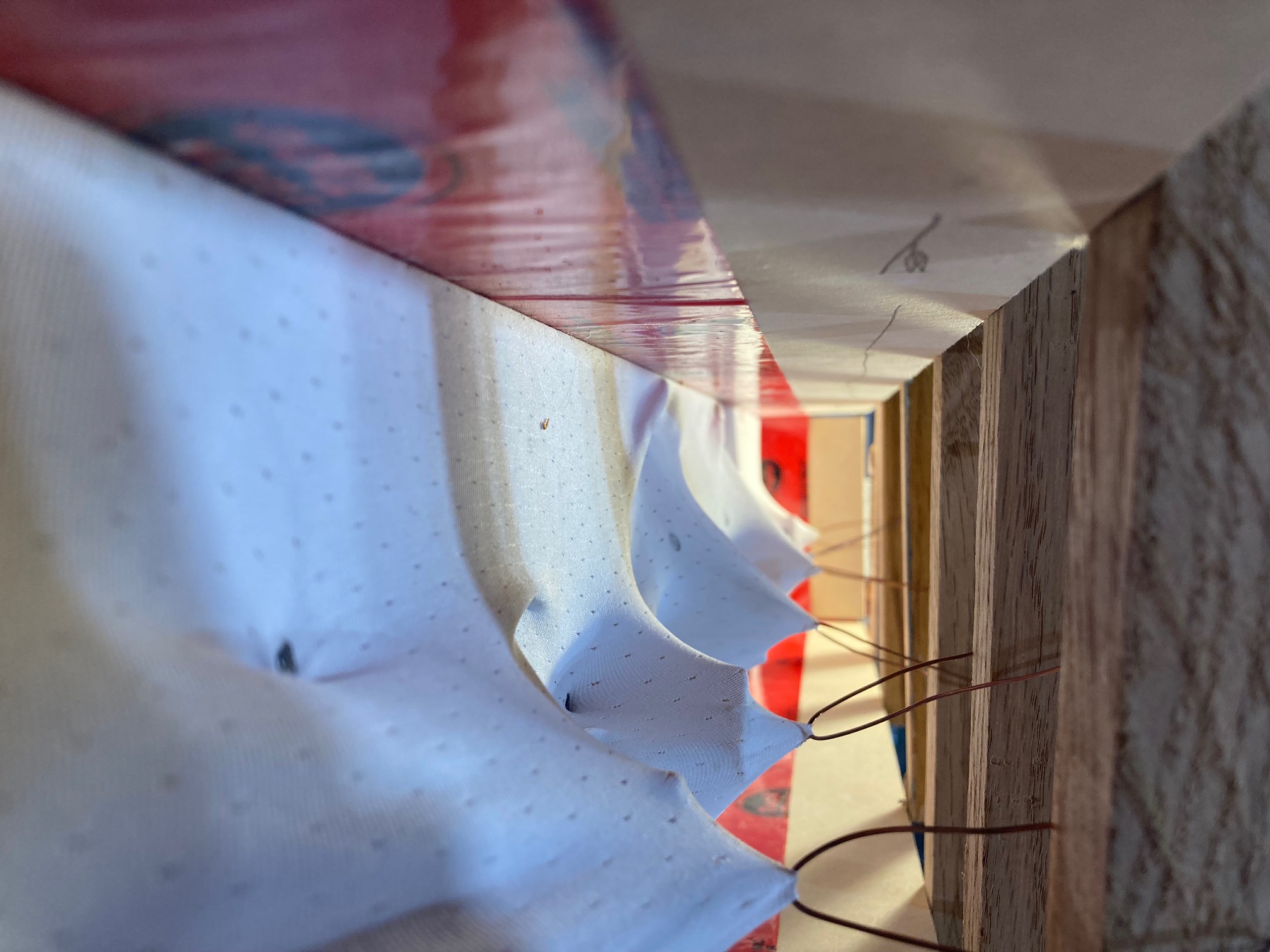
1:50 Model Formwork
Fabric Removal of 1:50
Materials
Rockite
Plaster
Aluminum
Acrylic
Upholstery Tacks
Wire
Plywood
Fabric
Tape
Wire Cable
Caribiners