Fingerprints
![]()
Designing the Design Studio
12.02.25
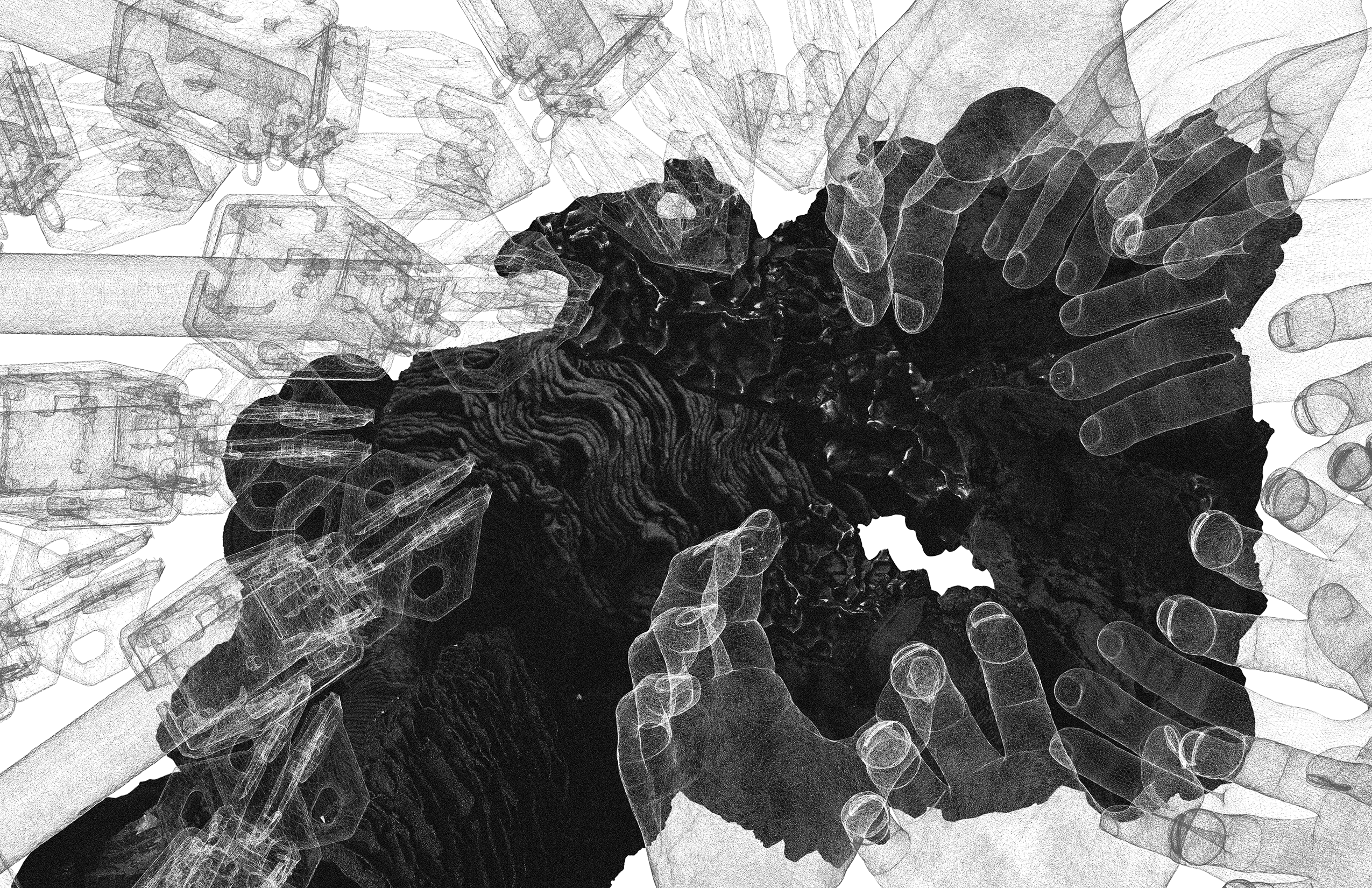
The integration of Artificial Intelligence into current architectural practice is ignorant to the fact that drawing and making is how architects and designers work to solutions. Image, text, and orthographic AI generation accelerates work to completion, shifting designer into curator.
To preserve the generative act of ‘making’ (a correspondance between material and human) we must integrate human sensitivity, and embodied intelligence into Artificial Intelligence processes rather than surrendering the generative work. Making is thinking.
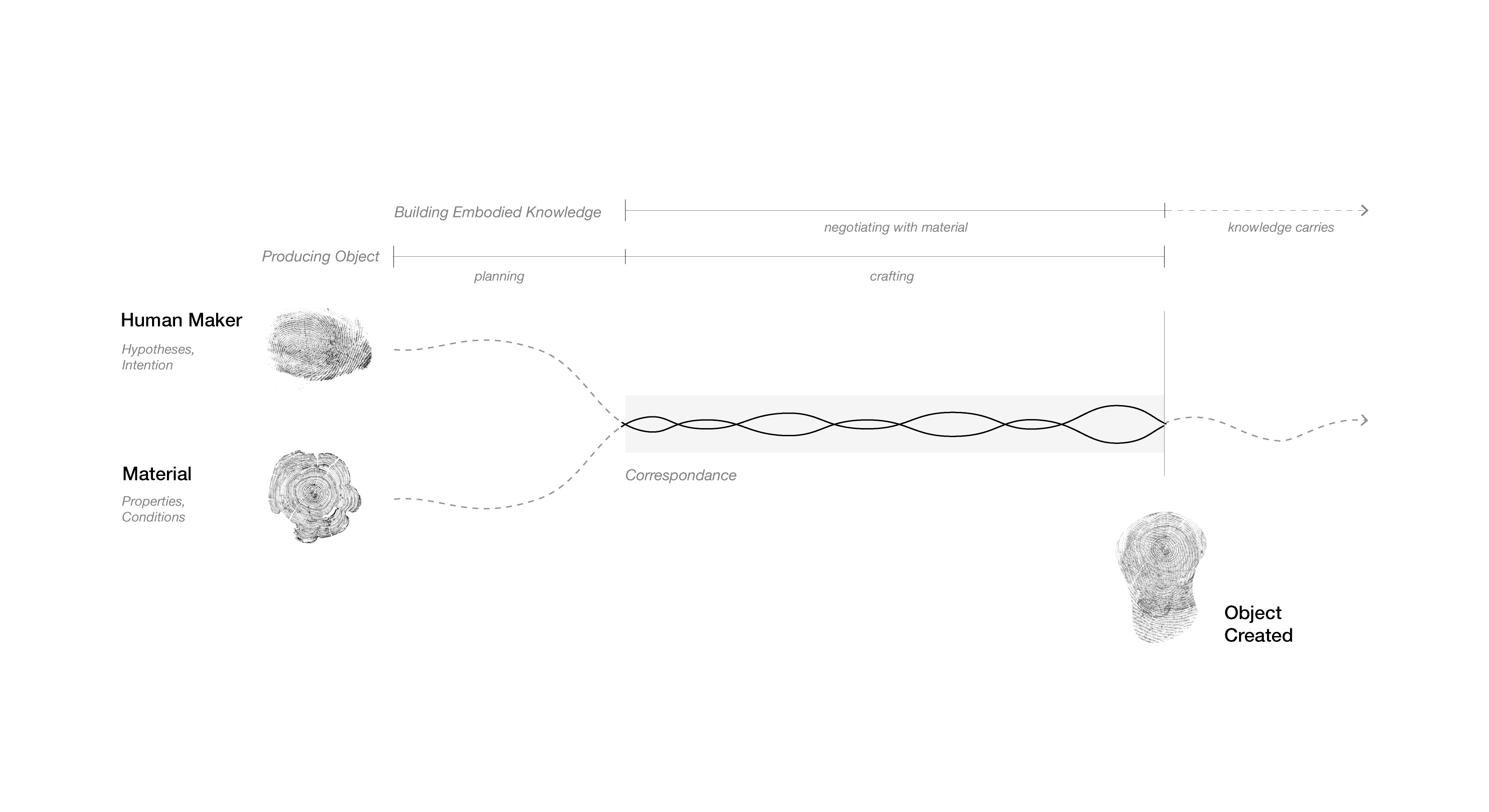
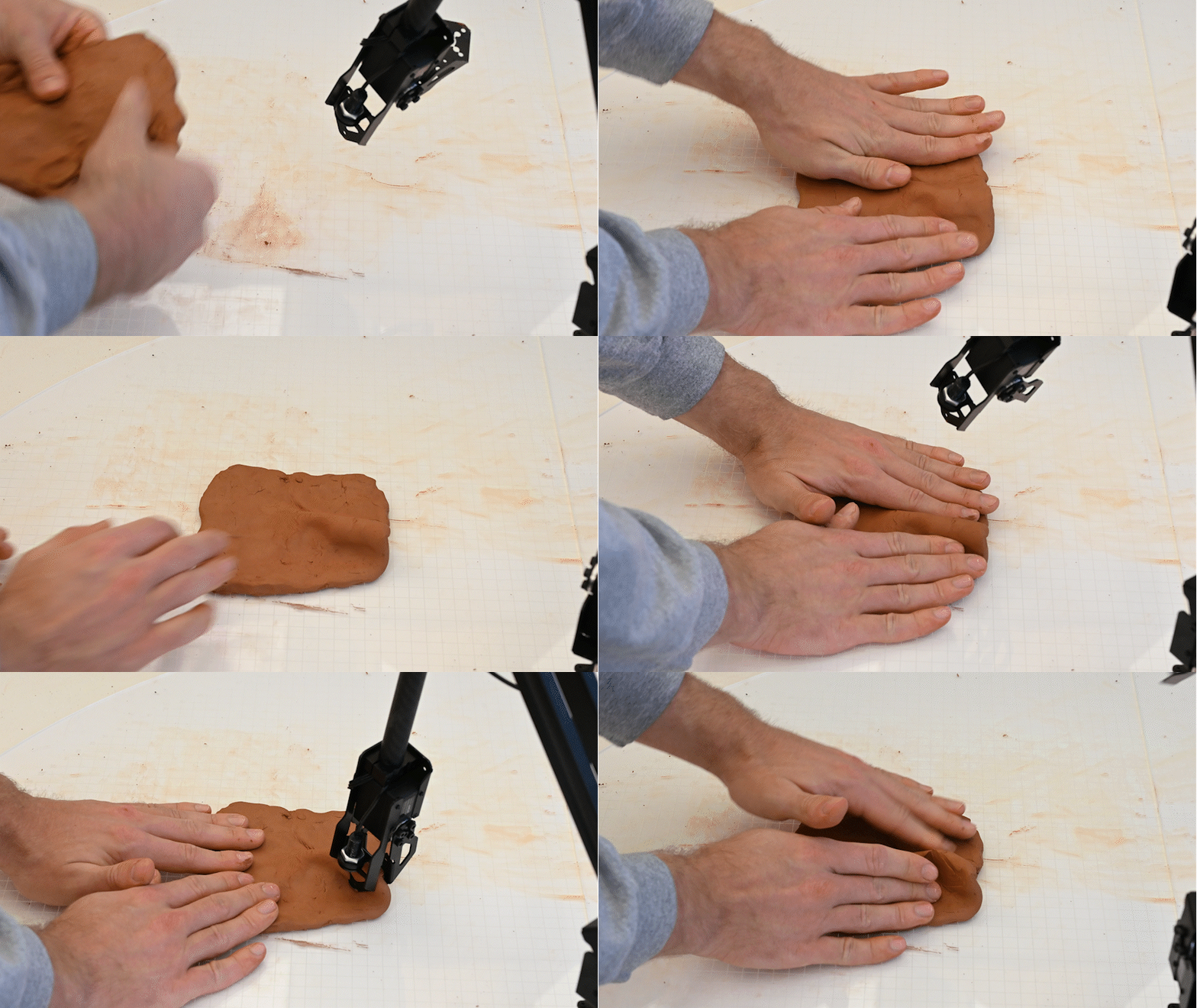
Traditional ‘Making’ Process
An affordable desktop robot, equipped with various sensors and given the ability to record and learn, enters the correspondance, mimicking not only what the maker does, but how. The body of knowledge carries not only in the maker’s mind, but in an evolving digital knowledge-base of movements.
![]()
![]()
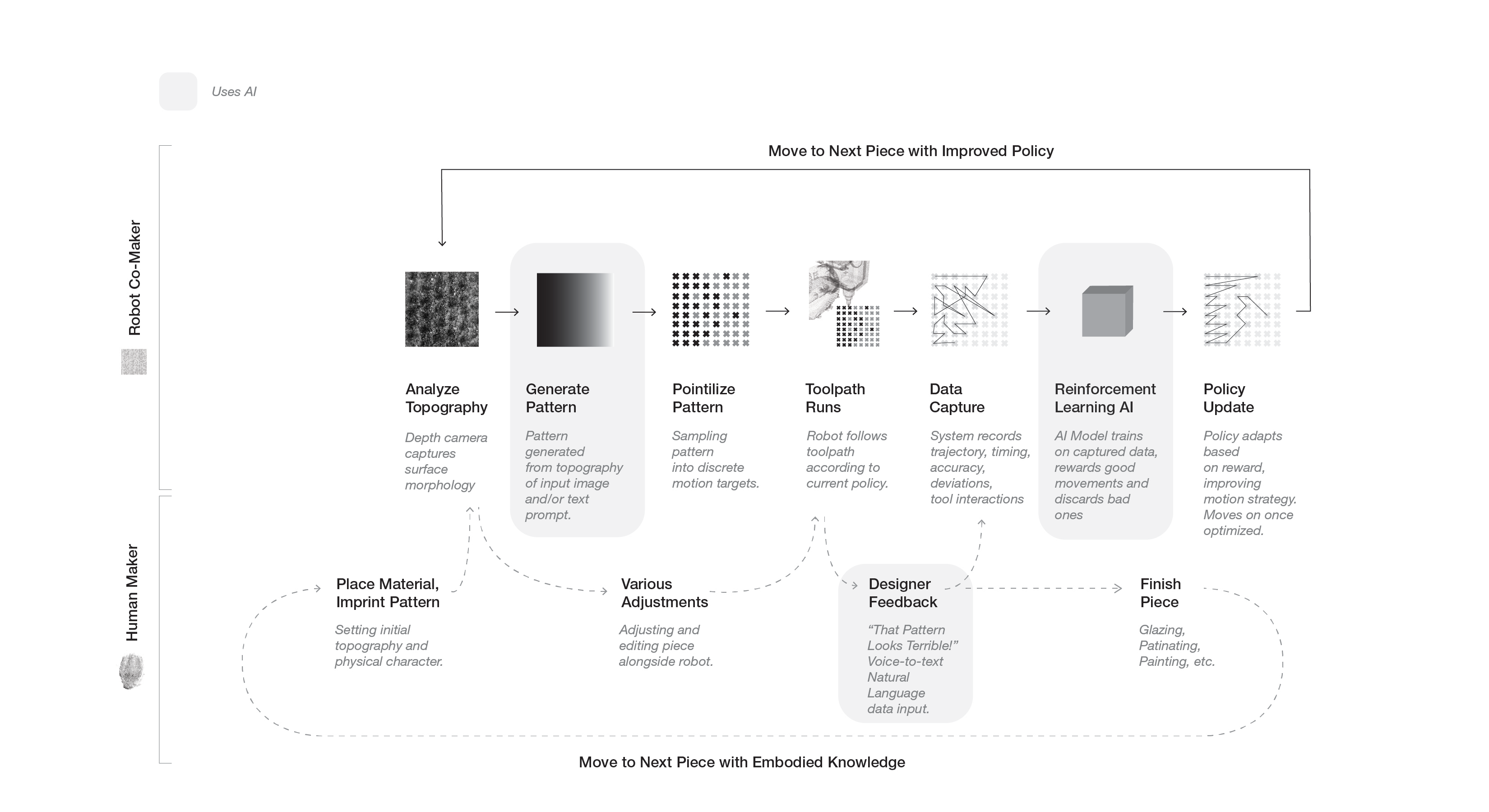
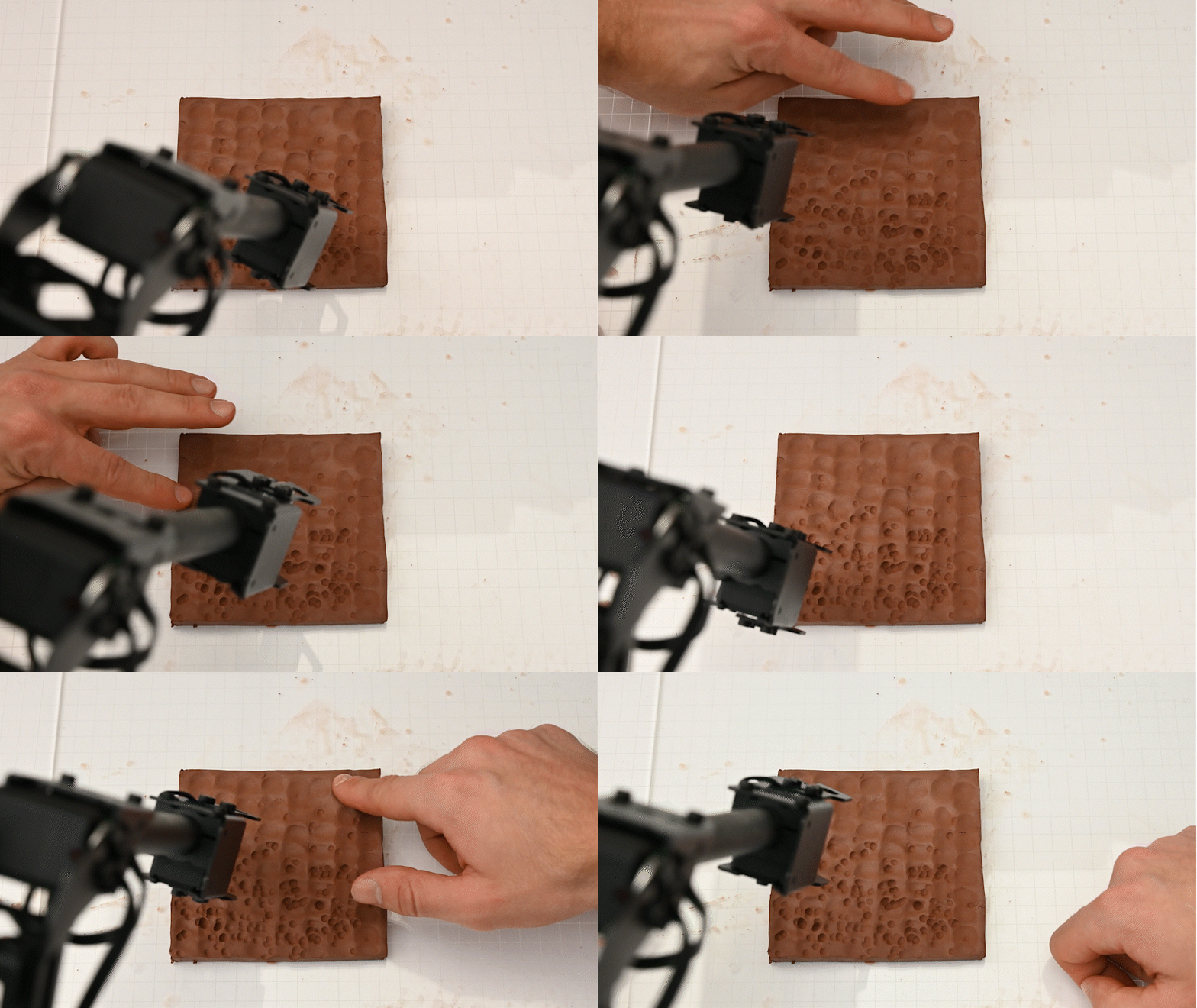
Handmaking tiles, as a mostly linear process, can incorporate a co-making robot at a few key steps. A human imprints a pattern, then the RO-ARM M2 desktop robot responds, creating a correspondance between three intelligences (human, material, and artificial). The AI generates a responsive pattern in response to prompting and sensor input. As it executes, verbal feedback can be translated via voice-to-text and interpreted by the AI to qualify each action, allowing a makeshift reinforcement learning system to evaluate outcomes and create a dataset of successful material strategies.
A set of tiles becomes an evolving data sculpture, each tile representing path execution and datapoint, materializing a dataset that would otherwise be invisible. The use of artificial intellgence has tangible and traceable effects on the physical world.
![]() AI-Incorporated Tile Making Process
AI-Incorporated Tile Making Process
![]()
![]()
![]()
![]()
![]()
![]()
AI Incorporated ‘Making’ Process
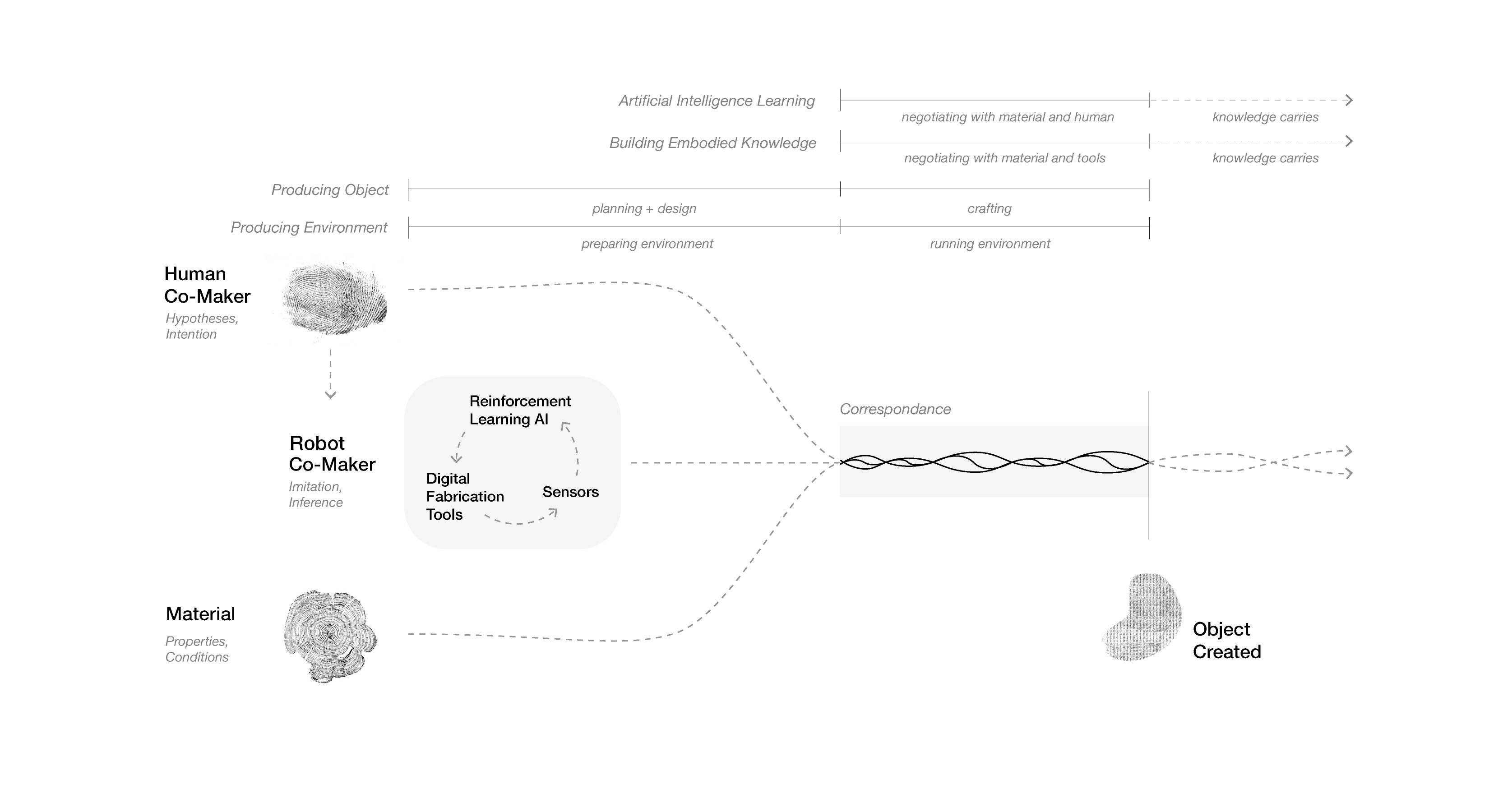
Handmaking tiles, as a mostly linear process, can incorporate a co-making robot at a few key steps. A human imprints a pattern, then the RO-ARM M2 desktop robot responds, creating a correspondance between three intelligences (human, material, and artificial). The AI generates a responsive pattern in response to prompting and sensor input. As it executes, verbal feedback can be translated via voice-to-text and interpreted by the AI to qualify each action, allowing a makeshift reinforcement learning system to evaluate outcomes and create a dataset of successful material strategies.
A set of tiles becomes an evolving data sculpture, each tile representing path execution and datapoint, materializing a dataset that would otherwise be invisible. The use of artificial intellgence has tangible and traceable effects on the physical world.
 AI-Incorporated Tile Making Process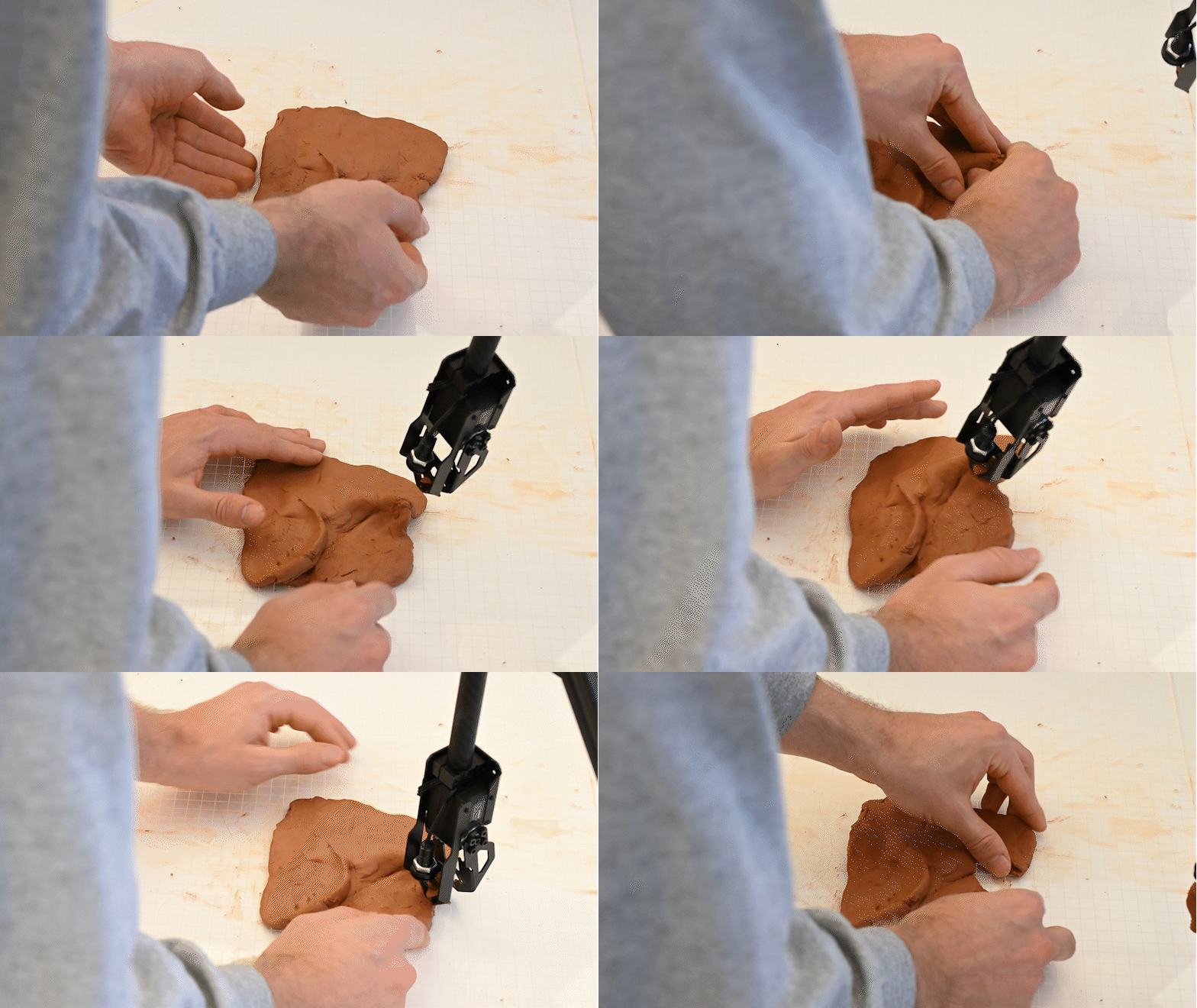
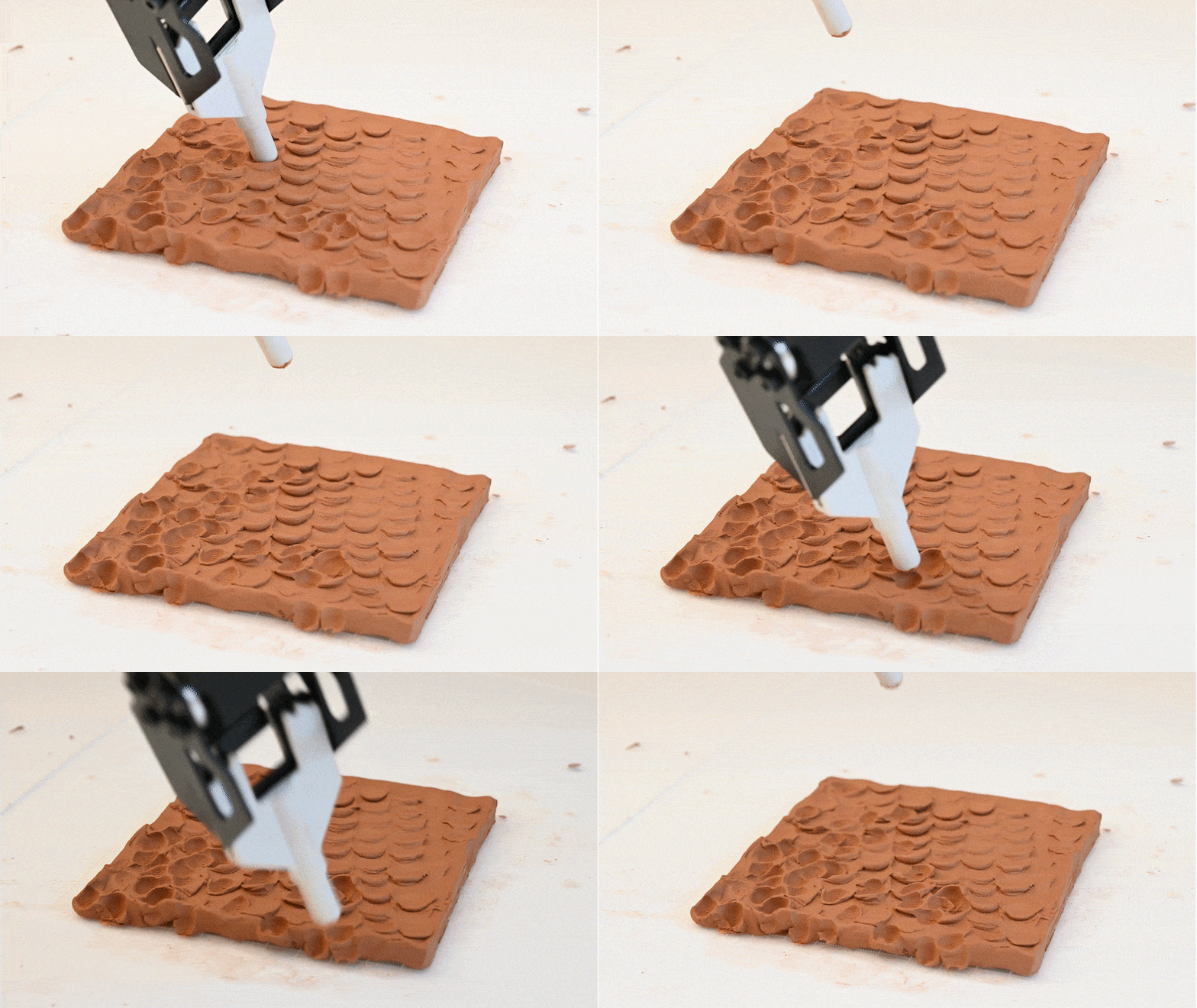
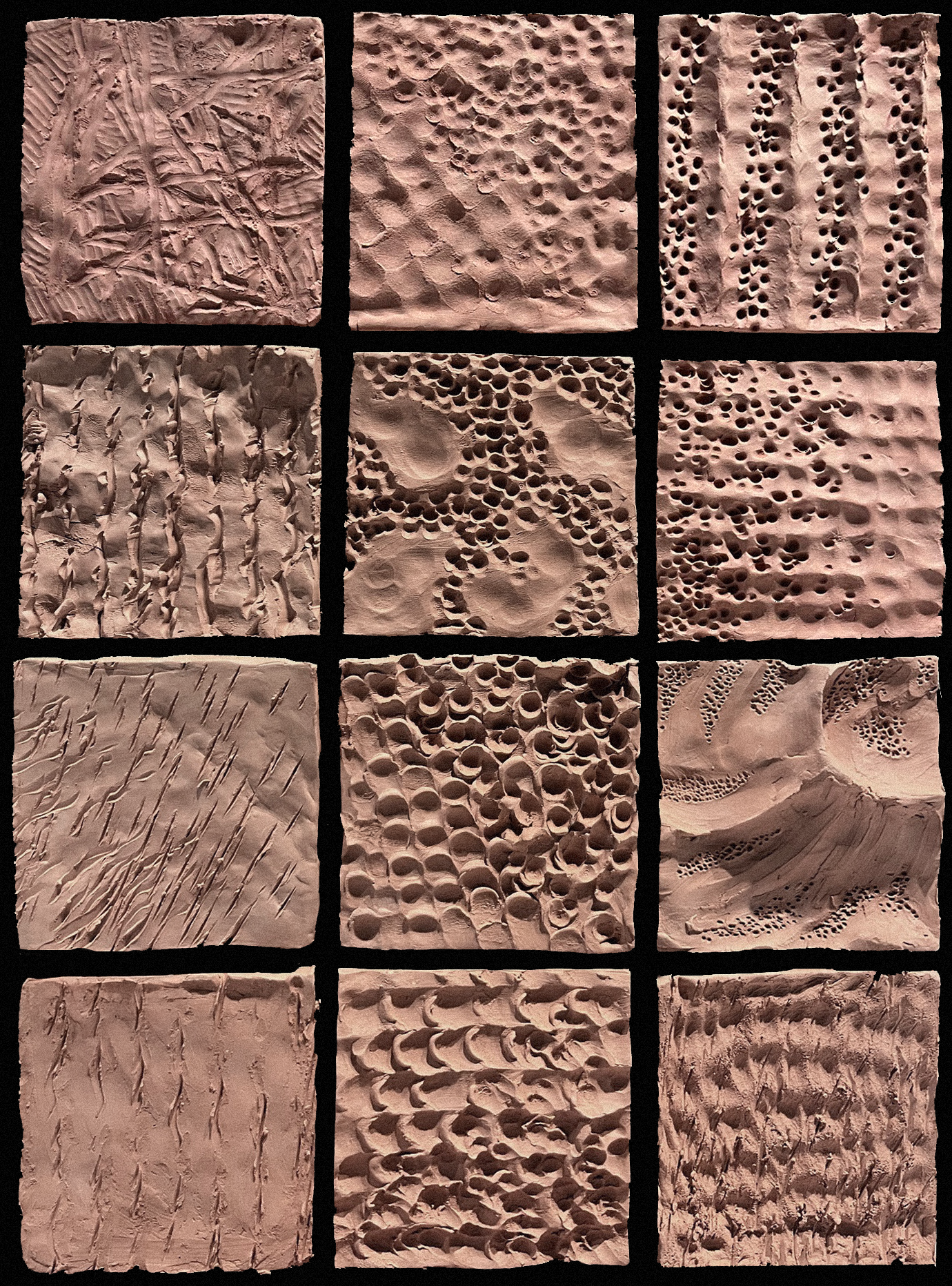
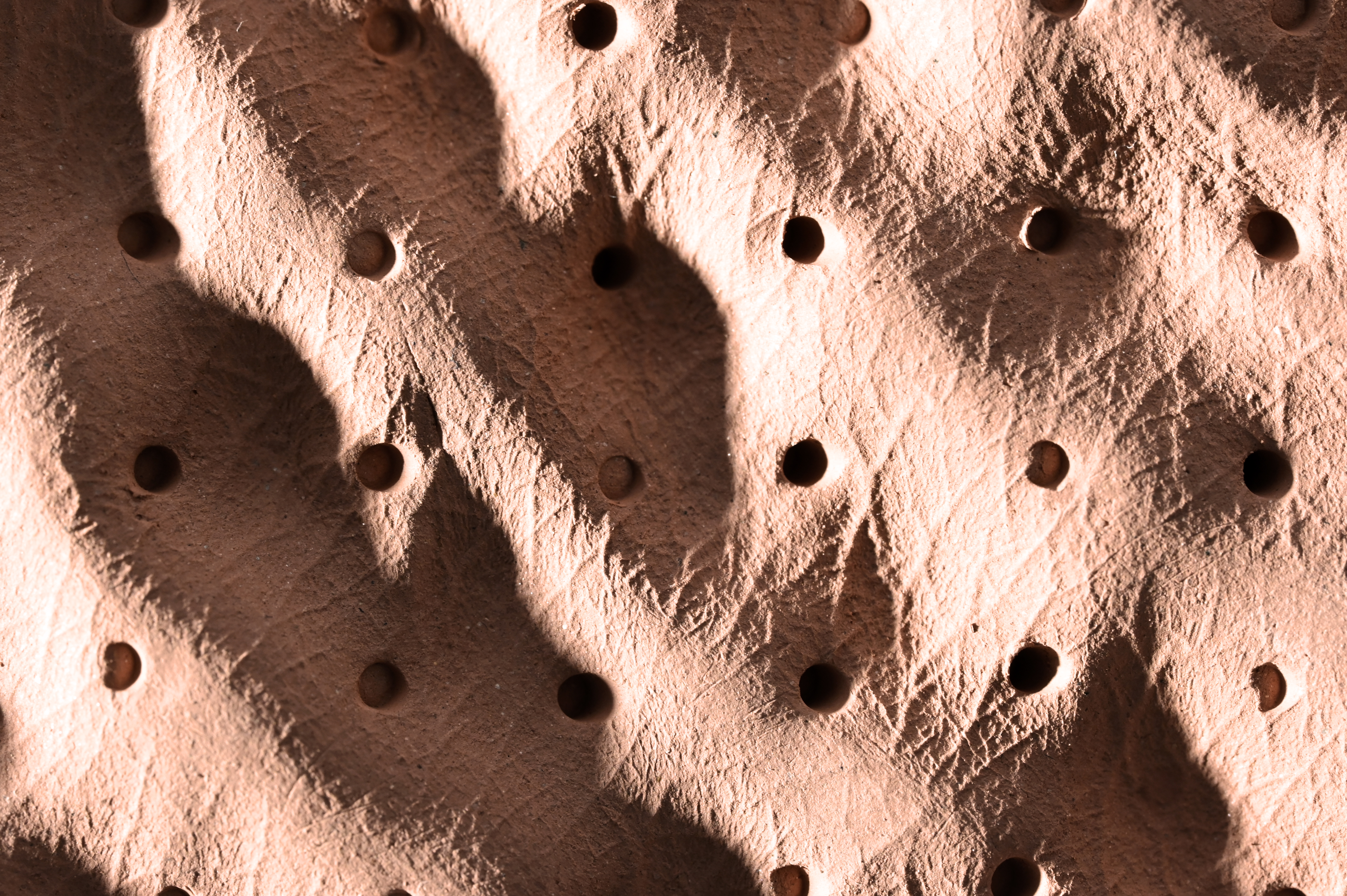
Tile Data Sculpture and Detail
Beyond a two-dimensional process, three-dimensional movements can be recorded in space and learned. By incorporating a depth camera that tracks joints and fingertips, human movements are captured in real time, replayed, and entered into a dataset that trains new movements while retaining the intricacies embedded in the original actions. A makeshift reinforement learning algorithm is created. 10 movements are recorded, only the succesful are stored, and an AI is asked in natural language to reproduce a similar movement pattern based on the successful dataset.
Beyond a two-dimensional process, three-dimensional movements can be recorded in space and learned. By incorporating a depth camera that tracks joints and fingertips, human movements are captured in real time, replayed, and entered into a dataset that trains new movements while retaining the intricacies embedded in the original actions. A makeshift reinforement learning algorithm is created. 10 movements are recorded, only the succesful are stored, and an AI is asked in natural language to reproduce a similar movement pattern based on the successful dataset.
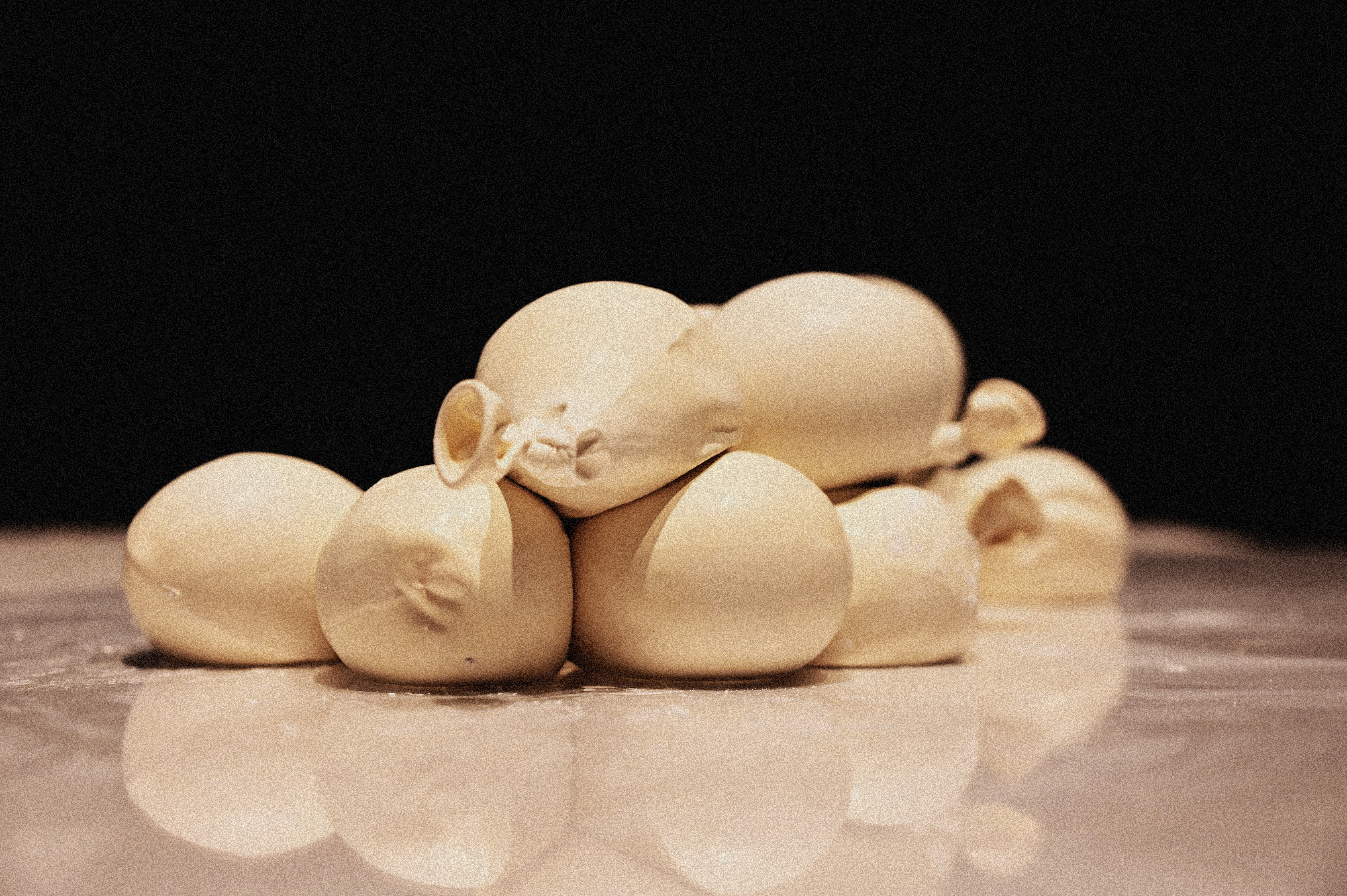
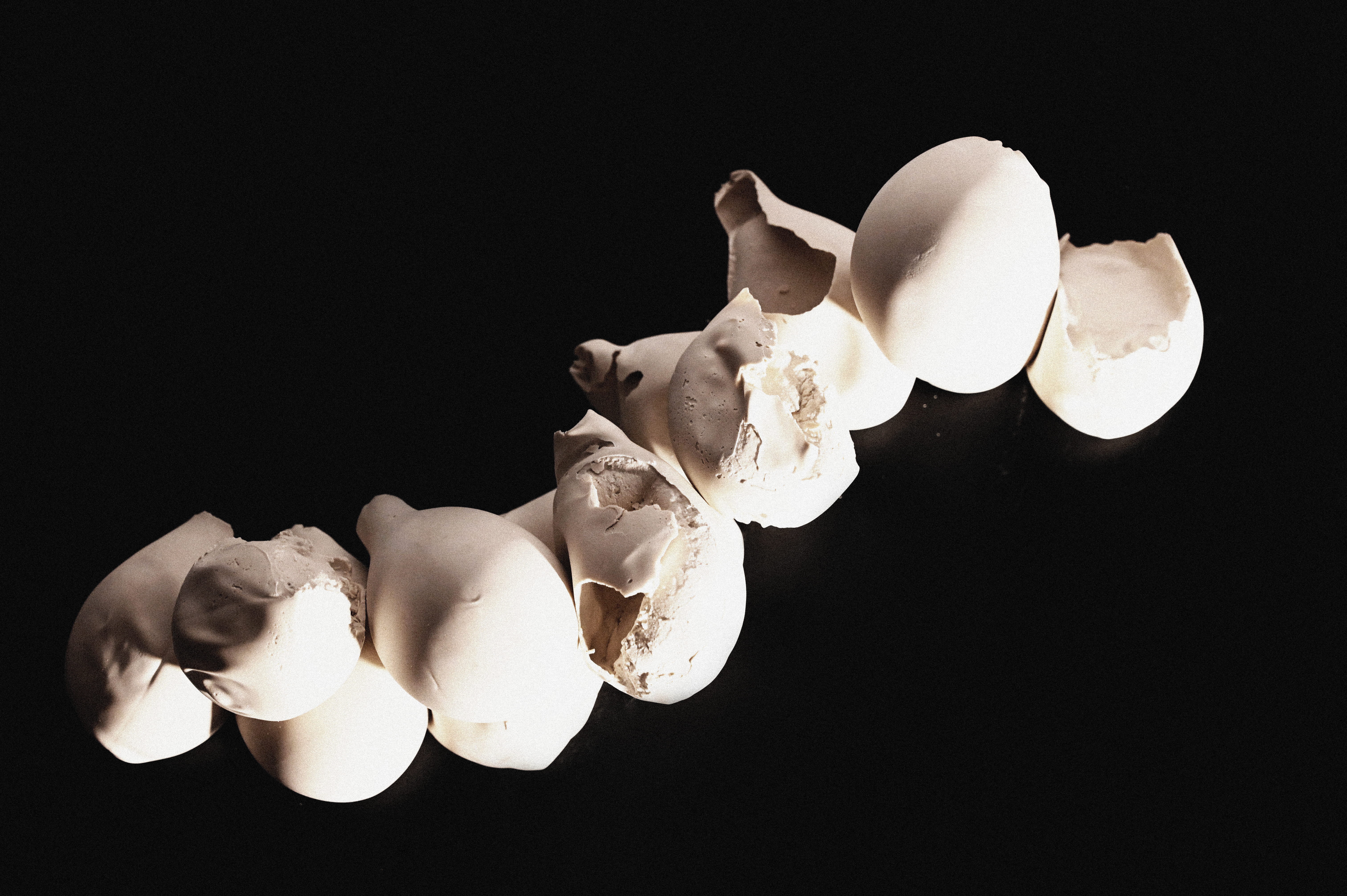
This is tested at the architectural model scale through co-making a fabric-cast plaster wall, where the human maker and robot alternate in placing units. The soft units accomodate the lack of wrist and finger axis, and allow for each unit to conform to the form of the previous piece.
![]()
![]()
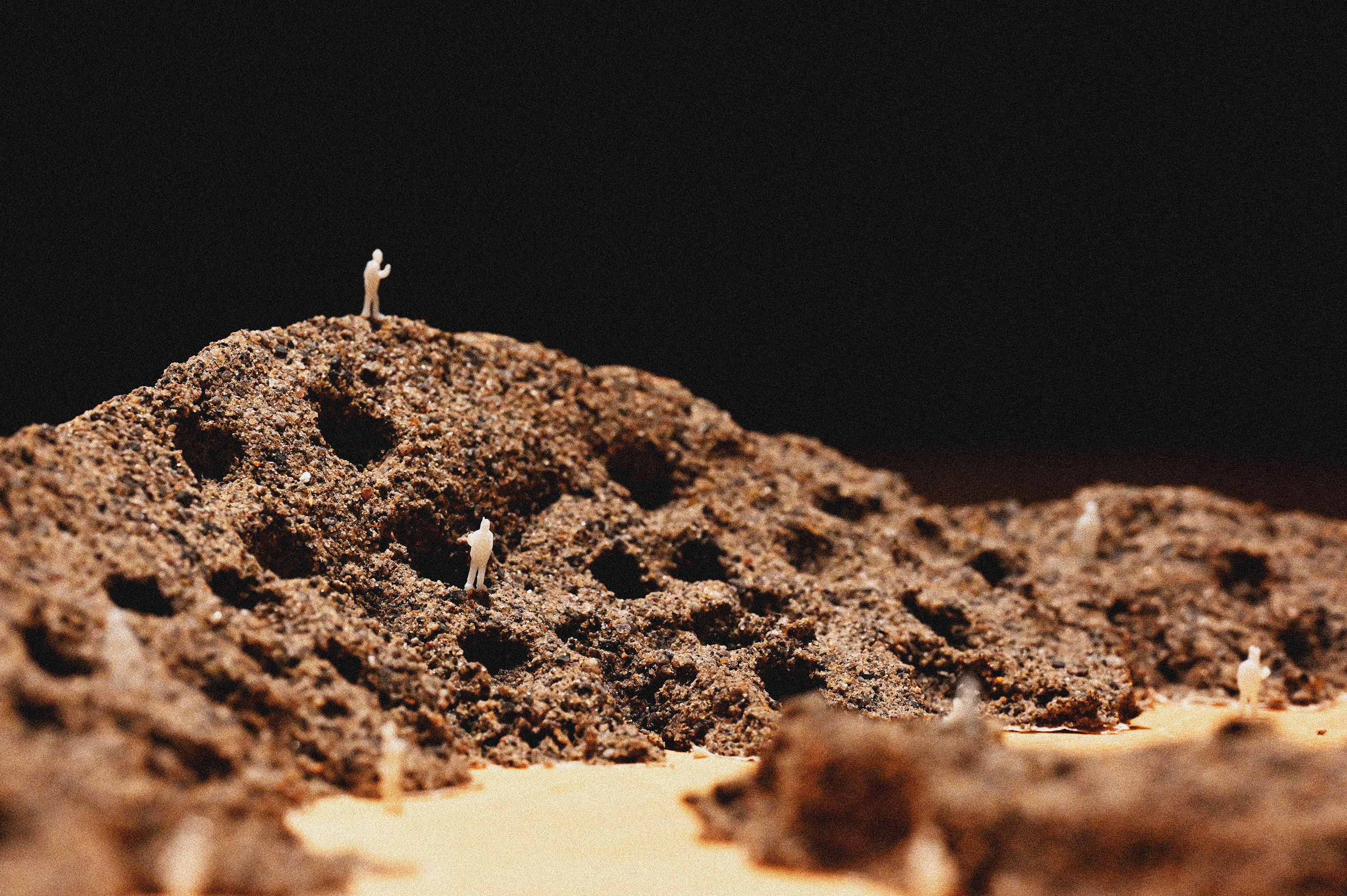
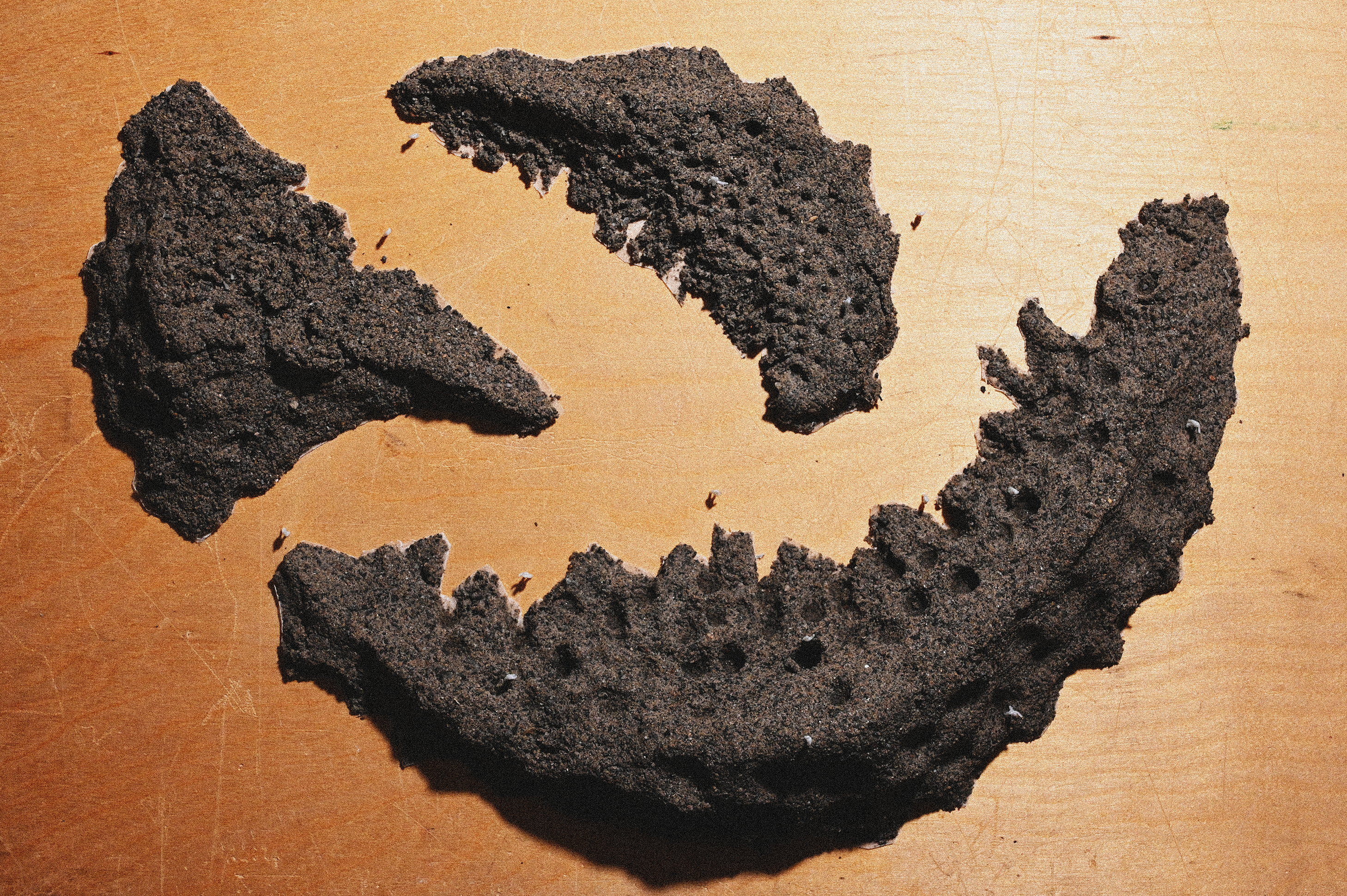
Using a loose-fill material, the robotic arm assists in landscape model testing by generating perforated sand dunes. Polymeric Sand is sculpted while wet, and hardens once dry.
![]()
![]()
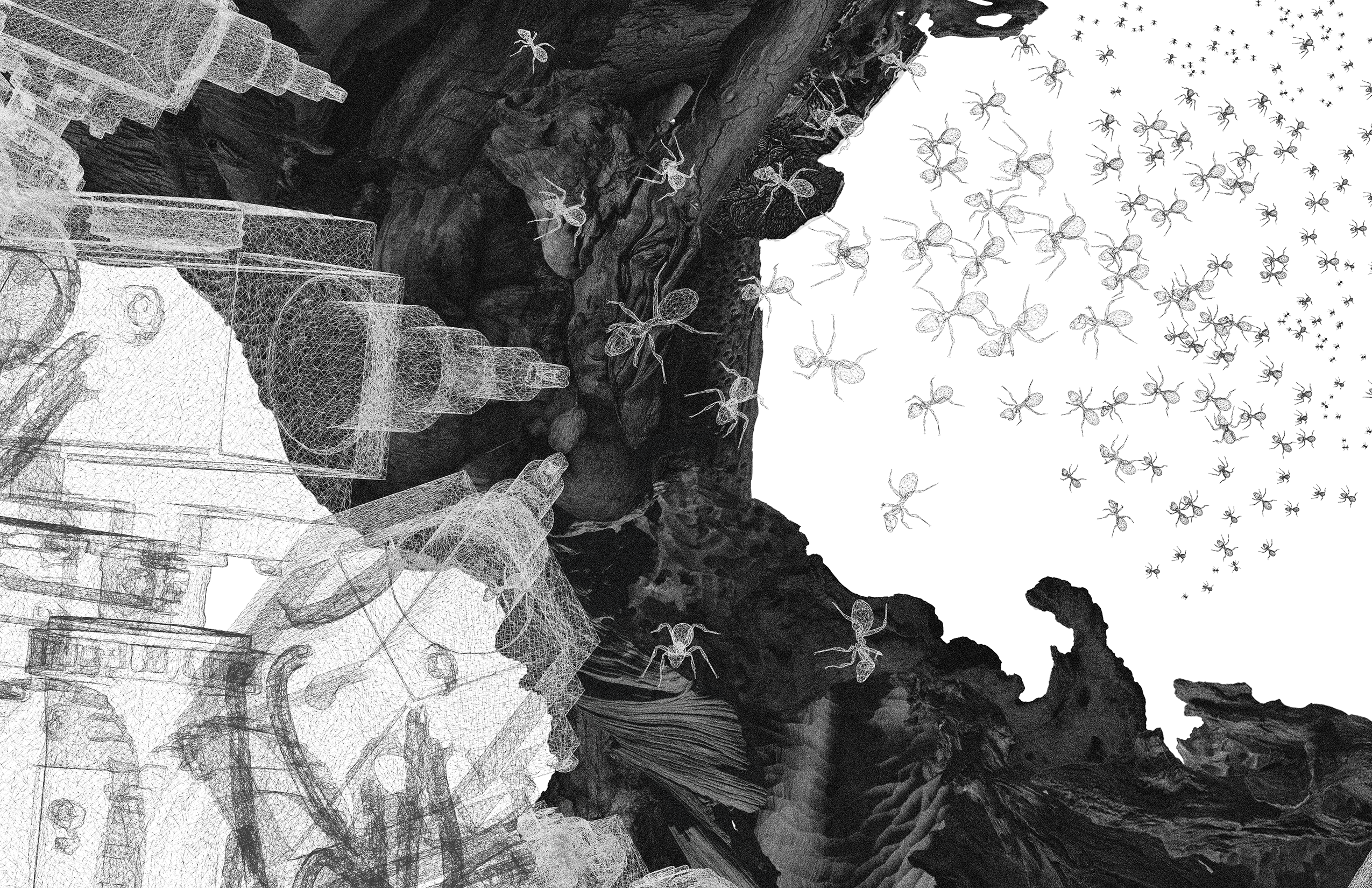
Artificial intelligence is especially effective at translating logic. By learning and collaborating with human movement, it can also mediate natural processes of construction, such as insect carving, erosion, growth, and material flow. Through AI, human makers, machines, and environmental forces can co-make, embedding previously unexplored embodied intelligences drawn from a range of bio-intelligent systems.
How many forms of embodied thinking have been lost to time? What underexplored methods of making could be influencing our built environment today, but are absent because they emerged at the wrong moment? By building an artificial intelligence knowledge base grounded in movement and material sensitivity, there is potential to preserve and transmit knowledge of making that transcends current methods of language and choreography.
![]()
Fabric-Casting
Robotics
Scripting (Grasshopper)
Tile-Making
Materials
Air-Dry Clay
Balloons
Plaster of Paris
Polymeric Sand
RO-ARM M2
Etched Clear Acrylic
Note: Use of Artificial Intelligence is strictly limited to coding assistance, voice-to-text translation into grasshopper, and movement path proposals based off human motion recordings. No drawing, diagram or text are AI generated. The intention is that AI should be solely focused on helping create an environment where human intuition is the creative driver.
Using a loose-fill material, the robotic arm assists in landscape model testing by generating perforated sand dunes. Polymeric Sand is sculpted while wet, and hardens once dry.
Artificial intelligence is especially effective at translating logic. By learning and collaborating with human movement, it can also mediate natural processes of construction, such as insect carving, erosion, growth, and material flow. Through AI, human makers, machines, and environmental forces can co-make, embedding previously unexplored embodied intelligences drawn from a range of bio-intelligent systems.
How many forms of embodied thinking have been lost to time? What underexplored methods of making could be influencing our built environment today, but are absent because they emerged at the wrong moment? By building an artificial intelligence knowledge base grounded in movement and material sensitivity, there is potential to preserve and transmit knowledge of making that transcends current methods of language and choreography.
Processes
Fabric-Casting
Robotics
Scripting (Grasshopper)
Tile-Making
Materials
Air-Dry Clay
Balloons
Plaster of Paris
Polymeric Sand
RO-ARM M2
Etched Clear Acrylic
Collaborated with Jin Kuang
Note: Use of Artificial Intelligence is strictly limited to coding assistance, voice-to-text translation into grasshopper, and movement path proposals based off human motion recordings. No drawing, diagram or text are AI generated. The intention is that AI should be solely focused on helping create an environment where human intuition is the creative driver.